
 August 31, 2026 "Converting the Convert-Able" Mixed Bag Fishing Beats Walleye Wishing"
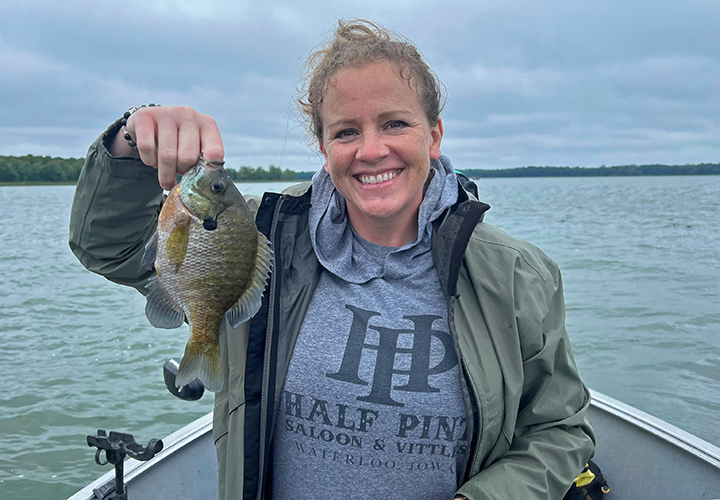 In many regions of Minnesota, south, northwest and north central for example, August has always been a month that challenges walleye anglers. It is not new news to me that catching walleyes on a calm, sunny day in 1986 was equally challenging to catching them in the same conditions during August of 2026. What has changed, at least for me, is the understanding of how to work around slow walleye fishing by finding something better to do.
Here’s a hypothetical question. Would you rather fish for 6 hours to catch 3 walleyes, or use those same 6 hours to catch 10 crappies? Or how about trading the same 3 walleyes for a mix of crappies, sunfish, perch and pike and instead of getting one fish every 2 hours, reeling one in every 10 minutes? If you’re saying, “I’ll take the 3 walleyes and leave the others behind”, that’s okay, that’s your prerogative, more power to you.
Sometimes I ask my customers about their preferences. If they say that they prefer “walleyes or die” fishing vs “mixed bag action” fishing, I do it, I work my hardest to fulfill their goals and I never give up until the last cast has been made. If we catch walleyes, great, but if we don’t, I’m not losing any sleep over it. There are days when I spend the lion’s share of my time explaining why I think we can’t get walleyes to bite. I offer theories about food supplies, water clarity, electronics, whatever appears to be happening at the time.
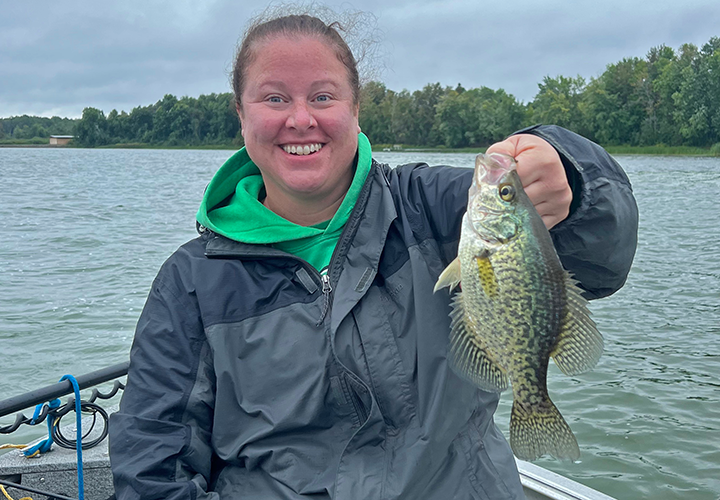 Simply put, there are times when fish do what they want, not what we want. They do whatever, whenever and however they want, and sometimes, we are not fishing at the right time, or in the right place, I just plain can’t change that.
On certain days, moving on from the pursuit of catching a walleye and switching over to mixed bag fishing can change everything. That’s especially true if I do it on a day when there’s an evening fish fry on the schedule. If we need fish to cook, and walleyes aren’t cooperating, I do have to find something. Feeding the family a meal of fresh fish, whether they’re sunfish, crappies perch or even pike often saves the whole fishing trip.
Peer pressure, especially within a family, can be a beautiful thing. So, at the end of day 1 of a 3-day fishing with the Gerdes family, the daughters, Jodi and Maggie, offered an alternative to “walleyes of die.” After eating their evening shore dinner, a meal of fresh panfish and pike, they told dad, Mark Gerdes, that we needed to change our focus. Reasoning that catching something, is a lot more fun than hoping to catch something, walleyes, didn’t make much sense. Their opinions, amplified by the tasty meal they’d just eaten, were hard to ignore.
Over the past 2 days, we fished 4 different lakes and on 3 of the 4, we caught good numbers of crappie, sunfish, bass and pike. By the end of their 3-day charter, they had their limits of crappies. A respectable number of nice sunfish, some nice eating size pike and even a few smaller size bass. The cooler they took home contained zero walleyes, but the faces in their car were all smiling, yes, all of them were smiling.
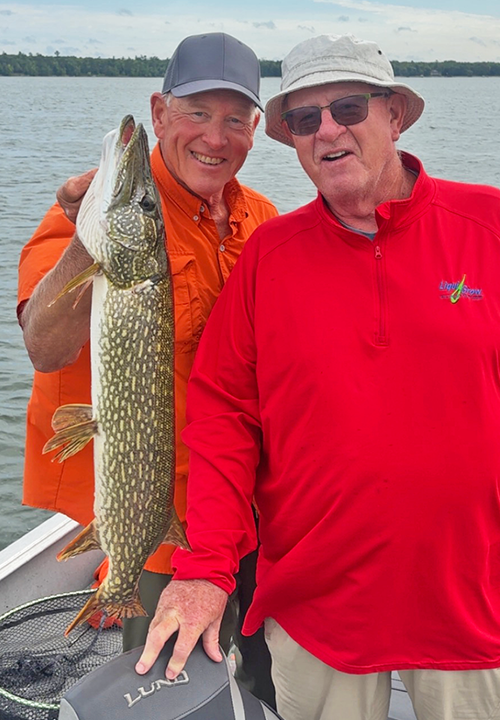 The fishing report is a familiar one. Surface water temperatures on every lake were the same, 71 to 72 degrees was average, I saw one temporary reading of 69.9 degrees at the ramp early yesterday morning. All of the lakes we fished had moderate to heavy algae blooms going on. The average water clarity was low, ranging between 4- and 6-feet deep and the vegetation was generally green, and very healthy.
Summer fish locations and fishing patterns remain locked in place. Despite our attempts to catch fish using jigs, bottom bouncers, and trolling, still fishing, and drifting, spinners along the weed lines were still the best presentation. The best depths varied lake-by-lake, on average, 6 to 10 feet of water was the most productive range. Most of the time, tipping the spinners with fatheads worked the best, but to single out bluegills, tipping the spinner hooks with night crawlers worked better.
I expect that it will take a significant cold snap to force fish to make a move. That cool weather could come at any time now, but I’m not seeing that in the forecast this week.
Okay, next summer, the Gerdes family plans to return, but during June instead of August. June is the month that they’ve typically come in the past, and that helps explain their expectations of catching more walleyes. So, my guess is that when you read the reports about their trip during June of 2027, the Gerdes family will be taking home some walleyes again. Today though, they’re happy, and looking forward to coming back, all because they had some fun catching something.
Sometimes I hear people refer to themselves as a specific type of angler. They offer statements like “I’m a walleye guy”, I’m a bass gal” or maybe “I only fish for …” x, y or z. Those terms do come up often in casual conversation and if you’re a purist who loves a certain species more than all others, that’s great! For me though, in this age of hyper-specialization, I’ve selected my own, personalized mission statement; “I’m an action fisherman” I just want to catch something, and I don’t really care what it is.
It’s been a while since Lindy published the “Lucky Kid” video and if you’ve never seen it, maybe it will shed light on my attitudes about fishing. Growing up, we pursued whatever fish we thought we could catch. If we were hungry for a fish meal, we ate whatever we came up with and they were always, all good, always! There’s no doubt, I truly was .... (View Video) >> “A Lucky Kid” and whenever there’s a way I can share that, I do. Hopefully someday, some of you, or your kids, or your grandkids will say the same thing because of it.  — Jeff Sundin, The Early Bird Fishing Guide Call-Text 218-245-9858 • Email • Facebook • X • Subscribe Insider Newsletter
Today's Feature Fishing Report: August 28, 2026 Sundin: "No Weeds, No Fish. Know Weeds, KNOW Fish!"
 There’s always more than one way to catch a fish, that’s just how it is. But on any given day, there typically is 1 “best way” to catch a particular target species. Crappies, on a recent fishing trip, hunkered into the shade of vegetation, and if we wanted to catch them, we needed to coax them out of the heaviest cover.
You might be thinking, okay, that sounds good, I’ll just go out and find weeds on my favorite crappie fishing lake and start catching them. Hold on, it might not be quite that simple. The type of vegetation is important; not all weeds will be holding fish in your favorite lake. And to complicate the scenario even more, where the weeds are located may be equally important as what type of weeds they are.
A few weeks agon when I visited the medium size, mesotrophic lake, we found a mixture of crappies, sunfish, bass and pike on slow-tapering, weedy flats in 8 to 12 feet of water. At that time, it didn’t seem to matter which weeds we fished, they all held some of everything. So, on this more recent trip, I started the day by fishing the same types of cover. The problem was that on this trip, the fish were not there, we trolled for a half hour or so without catching much of anything.
 At first, I blamed it on the weather, calm seas, combined with sunny skies had them hunkered too deeply in the grass, I speculated. But my assumption changed when I tried something different, a similar weed patch laying adjacent to a steep breakline into the lake’s deepest water. At this location, crappies were in the weeds, and they were shallow, 8 to 10 feet of water. If I kept my crew’s spinners running through the snaggy patches of flat stemmed pondweed, they caught crappies. If I moved out to the clean edges of the grass in 12 to 15 feet of water, they caught sunfish, but never any crappies.
To test my theory, I tried another steep breakline with similar vegetation and it worked again. Crappies held tight to the shallower weeds, sunfish held deeper, along the outer edges of the weeds, but not deeper than about 15 feet of water.
By now, we had a solid pattern, and fish were coming into the boat regularly but dragging through the weeds was tedious. I’d hoped that we could zero in on the fish by switching to jigs and soft plastics. There was just enough breeze to make me think we could drift along the weed edges and let the plastic tails provide action and entice strikes.
 Rigging up 1/8-ounce minnow head jigs and tipping them with 2-inch Mr. Crappie, Slabalicious tails, we began a slow drift along the weed edges. To a degree, the presentation worked but again, the drift was so slow that making the tails swim required extra help. Casting, swimming, and breathing life into the plastics was tedious too, and not working better than the spinners. So, after a short break, we resumed fishing with spinners and minnows.
By days end, we were happy, the fish were not as large as the ones I’d found a few weeks back, but they weren’t bad either. Sorting through a lot of small fish, we managed to gather 20 fish mostly over 10 inches, including a few that were “close enough”, 9-3/4-inch fish to round out the crew’s limits.
The fishing was good, but in and of itself, might not have been the highlight of that trip. The Hippie Chick, Susan, was in attendance and had the chance to meet another, maybe the original Hippie Chick, Cyndi Sue, the better half for my longtime customer, and friend Paul Guanzinni. To say that two “Hippie Chicks” hit it off would be the understatement of the month. They acted like sisters who hadn’t seen each other in a few years.
Fishing trips like that one reminds me about how much we over-emphasize the catch when talking about a fishing trip. The experiences, what we see, what we talk about, the stories we tell never get the attention they deserve. Eagles swooping down to grab fish off the surface, anglers dropping sunfish into old style wire baskets, loons fishing alongside the boat, those are the things we remember, not the “body count”.
If you’ve ever wondered how a guy who’s done a job for 42 year still looks forward to going to work, days like that explain it.
If you make it only about the fish, you are missing out on most of the happiest experiences. Obviously, we do enjoy the fishing and we love the catching too. Also obviously, I do enjoy sharing details about how and why we catch them. But hopefully when you read the reports, you get the “feel” of why people go fishing. We almost always catch enough to be happy, the trick is knowing that we were already happy to begin with. — Jeff Sundin, Call-Text 218-245-9858 • Email • Facebook • X • Subscribe Insider Newsletter
August 26, 2026 "Cass Lake Perch Fishing Mini-Report"
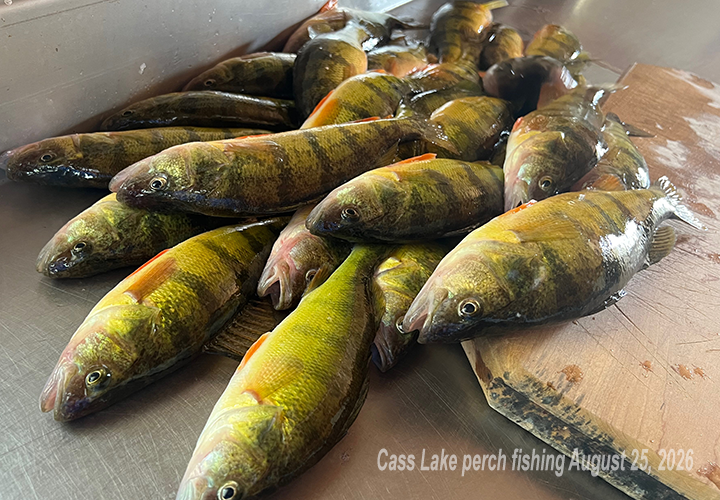 Are you a fan of catching perch on Cass Lake? Many are, so, a lot of folks may already know this. But if you haven’t been there yet, I can say that there are good numbers of perch on the prowl right now; that’s the good news.
The not-so-good news is that the average size, at least at the moment, is below average for Cass Lake. For every dozen fish we caught on Tuesday, we maybe kept 1 of them. And for the fish we harvested, crossing the 10-inch mark on my ruler was a chore. Some were better than others, but I’d say that the average fish we kept was about 10-1/4 inches.
Most days, trolling spinners tipped with minnows is the search tool we use to find schools of active fish. That’s how we started our trip yesterday morning. It didn’t take long to figure out though that finding perch would be the least of my troubles; they seemed to be everywhere. Legions of small ones chased the spinners and attacked them as if they hadn’t eaten all summer.
In an attempt to single out larger size perch, we switched from trolling spinners to jigging. There was a stiff breeze, so drifting the breakline was easy, and as we drifted, catching more perch, mostly small ones were also easy. Hoping for even more protection against the smallest fish, I tied on a 1/8 ounce, long shank jig and tipped it with the 4-inch size Eye Candy paddle tail. Okay, that worked for getting rid of the small ones, but it was also a lot slower presentation in terms of action.
 I did catch a couple of nice size perch and got cut off by 1 nice northern pike and if I had been fishing alone, I may have spent the whole day using that method. But despite their small size, the crew was still happier with the fast action. If we’d gone long enough between strikes, I think the risk of boredom could have become a problem.
If there was any “trick” to finding larger perch, it was to locate the heaviest weed cover possible. When we encountered heavy weeds, there was almost always a couple of better-quality fish hanging out there. The key depth for the better vegetation ranged between 6 and 8 feet deep, no deeper than 10 feet.
Water temperature, still warm, may have been part of the reason we caught so many small fish. At 72 degrees, summertime patterns persist and as temperatures cool, the balance of predator vs prey should change; at least that’s the working theory.
I called this a mini-report and that’s what it is. We really had perch fishing in mind, and never tried to catch walleye or pike. So, I don’t have a lot of new information along those lines. Whenever there’s some new news, I’ll share it.
By the way, one of the guests at Wishbone Resort told us that they’d been having better luck using leeches for larger perch. We tried testing that theory, but for us, it did not prove to be effective. So, to conserve the valuable leeches, we cut the experiment short and returned to using minnows instead. So, plan on bringing a lot of minnows if you’re headed to Cass Lake anytime soon. — Jeff Sundin, The Early Bird Fishing Guide Call-Text 218-245-9858 • Email • Facebook • X • Subscribe Insider Newsletter
 Ely Area, Arrowhead Outdoors Fishing Report August 26, 2026
 Smallmouth Bass Fishing
Anglers continue to report excellent fishing for smallies right now. Beetle spins, spinnerbaits, chatterbaits, in-line spinners, urchins and whopper ploppers are all catching big numbers of smallies right now. Anglers have been focusing on rivers, river mouths, main lake points with large boulders, around islands and sunken islands, again with big boulders. Biggest key here has been the big boulders. Find big boulders, find the smallies.
Walleye Fishing
It's the same story continuing again this week with the walleye fishing. Trolling continues to be the most productive way to put a limit of walleyes in your boat this last week. Leadcoring small crankbaits in that size 5 to size 7 range in firetiger, perch or yellow perch, in that 15 to 30 feet of water has been very effective. Other anglers have been having good luck pulling spinners tipped with either a leech or a crawler Around sunken islands, again in that 15 to 25 feet of water. Orange, firetiger and gold have been hot colors for anglers fishing this way.
Smallmouth Bass - The smallmouth bass fishing continues to be the hottest bite happening in the Ely area right now. Bass really seem to be responding to the cooler nights dropping that water temperature. Anglers are reporting that they are catching numbers of smallies with spinnerbaits, urchin baits, in-line spinners, chatterbaits, crankbaits, whopper ploppers and Ned rigs around rocky shorelines and sunken islands. Bigger the rocks the better! Just about anything in crawfish colors has been red hot right now.
Panfish Fishing
The crappie and sunfish bite is right behind the bass bite for the hottest bite happening around Ely right now.
Crappies continue to be found hanging around the weed beds, particularly thick cabbage stands. During the day crappies can be found hanging close to the thickest weeds seeking shade and food. Anglers have been having great luck dropping small jig/twisters right next to the cabbage. During the last hour of light crappies break away from the cabbage and start moving, looking for food. This is when fan casting around weedbeds and weedlines often results in fast action.
Sunfish can be found in these same areas, but often they are working areas with a little less weeds, pencil weeds and downed trees. Small red worms, fished under a bobber have been deadly right now.
Northern Pike Fishing
As water temperatures start to drop, anglers are finally starting to catch some pike over the 32 inch mark. Many anglers have been encountering these bigger pike out around sunken islands while fishing for other species, but increasingly we are getting reports of bigger pike starting to show up along weedlines and river mouths. Large spoons, large swimbaits and large crankbaits, fished in 10 to 15 feet of water around weedlines, river mouths and large main lake points.
Lake Trout Fishing
Lake trout anglers continue to report that they are finding lakers deep in that 50 to 70 foot range. Covering ground is always key to catching lakers this time of the year, so anglers continue fishing for lakers with down riggers or dipsy divers, tipped with large trolling spoons. Anglers fishing up in the boundary waters have been drifting over deep water while jigging heavy tubes, bucktails or twitch blades. These anglers have been finding lakers in that 50 to 100 foot of water range.
Stream Trout Fishing
Stream trout anglers fishing from shore are really starting to catch nice rainbows this last week as water temperatures continue to fall. These anglers have been having the best luck hanging a night crawler, under a bobber about 5 to 15 feet down. Anglers fishing from a boat continue to troll with cowbells, tipped with a small crankbait or spoon to catch their limit of trout. These anglers have been focusing on about 20ft of water as they troll over water anywhere from 30 to 100 feet deep. — Arrowhead Outdoors, 218-365-5358
Lake of the Woods Fishing Report August 25, 2026
 "The successful summer pattern rolls on at Lake of the Woods! Fishing has been excellent, with big numbers of fish stacked over the deep mud. Most anglers are pulling spinners and crawlers or trolling crankbaits, and both are producing with great success.
Big Traverse Bay (South Shore) Lake of the Woods
The deep mud on the south end remains the place to be. Big schools of walleyes are roaming the basin, and the same two presentations continue to shine: crawler harnesses pulled slowly behind a bottom bouncer, and crankbaits trolled to cover water and trigger active fish. Watch your electronics, get your presentation down to the fish, and the rest tends to take care of itself.
Just how good is that deep-mud bite? Good enough that the AIM Pro Walleye Series held its Minnesota Championship here this past week. The winning bag of five walleyes tipped the scales at 54.29 pounds, that equals about an 11-pound average weight per walleye!
 Many of those tournament pro anglers were using forward-facing sonar to "sharp-shoot" individual walleyes in deep water, out over the lakes main mud basin. The huge weights that came to the scale tell you everything you need to know about the caliber of fish swimming out there right now.
Most anglers are finding eater walleyes (under 19.5 inches), saugers, some slot fish that must be released (19.5 - 28.0 inches), and an occasional trophy fish over 28 inches.
Rainy River
For a change of scenery, the Rainy River is always a rewarding option. A resident population of walleyes lives here year-round, joined by good numbers of smallmouth bass, pike, and sturgeon, so there's plenty to keep a rod bent. Some anglers make the river their main destination this time of year, while others treat it as a great fallback when the wind kicks up on the big water. With miles of navigable, fish-filled current to explore, it rarely disappoints.
Northwest Angle Lake of the Woods
Up among the islands at the Angle, variety is the name of the game. Walleyes are being caught on both the Minnesota and Ontario sides, with spinners and crankbaits doing much of the work, though guides who favor structure will keep jigs tied on all summer with good results. Whether the fish are spread out over mud or schooled tight to a reef, good numbers and a genuine mixed bag are the rule up here — walleyes, pike, smallmouth, perch, and more all in play.
There's lots of good muskie activity throughout this part of the lake. Reports are overall very good, with anglers casting shorelines with a variety of lures from spinners to topwater to hardbaits, nice fish are being caught.
Before You Go
We appreciate the tournaments that choose to come to Lake of the Woods. We also especially appreciate the catch-and-release format that the vast majority of tournament circuits have adopted. Sending those big, healthy walleyes back to the water is a big part of what keeps this fishery as strong as it is.
A quick reminder on the regulations: the combined walleye and sauger limit is 6 fish total, with up to 4 being walleyes. All walleyes between 19.5 and 28.0 inches must be released immediately, with one walleye over 28.0 inches allowed in posession. A 2026 Minnesota fishing license is required.
Fishing has been excellent, and there's still plenty of open-water season left to enjoy. Plan your trip, come on up, and make some memories." — Lake of the Woods Tourism, (800) 382-FISH
 Lake Winnie Cutfoot Sioux Fishing Report August 24, 2026
 "There is a strong algae bloom going on right now and water clarity is low when compared to mid-summer readings. The Secchi disk readings on Sunday ranged from 7 to 8 feet deep depending on the lake location where they were taken. The decreased water clarity has helped make it easier for anglers to approach schools of fish. At the same time, strong algae blooms encourage fish to move away from deep water where oxygen levels are decreasing.
Walleyes are now showing up in greater numbers along shoreline breaks and spread across the lakes sprawling flats. There are recurring stories of improved walleye fishing action and perch, pike and crappies are beginning to show up in classic early fall spots. Steep breaklines that bridge the gap between patches of shallow vegetation and deep water. Best fishing depths range from 8 feet on the shallow side, down to about 16 feet at the base of the breaklines.
Both the lake and the fish are doing what they can to satisfy anglers. Now all we need is a little extra cooperation from ..." Read >> Bowen Lodge Lake Winnie Fishing Report August 24, 2026
More Recent Fishing Reports
L.O.W Walleyes 8-25 • Lake Winnie Report 8-24 • Sundin Crappies 8-20 • Ely MN • 08-19 • Vermilion 08-14 • Winnie 08-11 • Sundin Sunfish 7-26-26 • Goettl History 7-24 • Delicious Bowfin 7-22-26 • Sundin 7-16 • Lake of the Woods 7-16 • Ely MN 7-16 • Winnie 7-14 • Sundin 7-14 • Leech Lake 7-9 • Ely MN 7-8 • L.O.W. 7-8 • Sundin Report 7-1 • Grand Rapids 6-20 •
Follow on X • Follow on Facebook
 Wired2Fish August 24, 2026 "Best Trolling Motors for 2026"
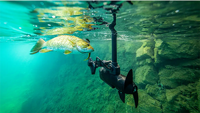 "There ain’t no two ways about it. A good trolling motor lets you slip through the pads quietly or keeps you in place against current or wind, putting your rig in the perfect position to tempt bucketmouth bass, Walter walleyes, and slab crappie.
While smaller craft may rely solely on a trolling motor, larger vessels typically pair a trolling motor with a main outboard engine. The outboard gets you from spot to spot quickly, while the trolling motor lets you maneuver quietly once you arrive. Regardless of your budget, investing in the best trolling motor you can afford will make a huge difference on the water.
The trolling motor market has exploded over the past 10 years. Where two brands once dominated the industry, nearly a dozen manufacturers now produce electric propulsion systems for ..." Read Full Story >> Best Trolling Motors for 2026
August 20, 2026 "Late Summer Crappies, Sunfish Holding Their Own"
 Without doubt, this is the most confusing time of summer for me. It’s always true, mid-August days in north central Minnesota are sometimes the best fishing days of the year, but sometimes, they can be the hardest too.
There’s no one thing to really blame it on, it’s just a time of the year when there are a lot of transitions going on. Changing water and weather conditions, fish migrations, peak vegetation and baitfish supplies, it all adds up.
Then there’s the time it takes to figure out where to go. The sheer volume of opportunities is confusing by itself, with so many lakes to choose from, it can be anyone’s guess which ones are good, and which ones aren’t. Chasing reports of other people catching fish usually leads to disaster. Despite the illusion of success provided on “social media” sites, most folks are rarely offering any solid information. So, for me, if I don’t go there myself, I won’t really know if there are fish biting or not. I love exploration, but it is time consuming, and sometimes, I burn up too much time trying to guess the best lake for a given day.
Another part of the “boom or bust” nature of late summer fishing depends too on where we’re fishing within the state. Lake of the Woods, Rainy, Vermilion and other lakes further north can offer awesome walleye fishing during late summer. At the same time, lakes to the south might be providing fabulous bass and panfish action, but coughing up few, if any walleyes. Being open to capitalizing on alternative opportunities is a big part of what makes some days great for my customers and yesterday provided yet another reminder.
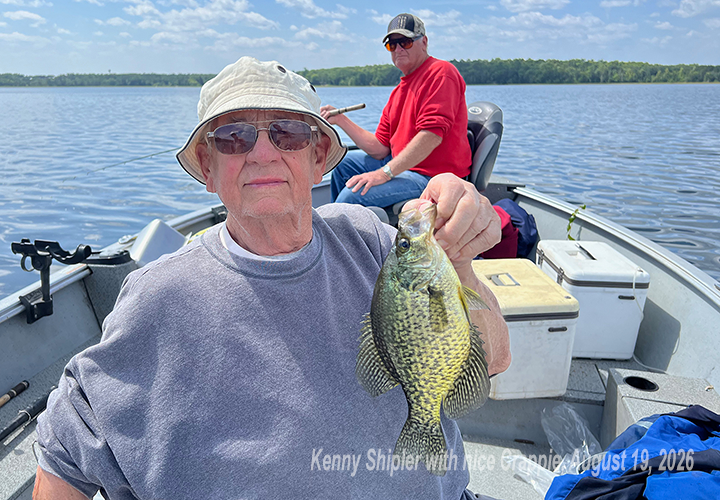
Kenny Shipler has been fishing with me for a long time. We tried to pin it down yesterday and came up with 1986 or 1987 as a possible first meeting. We’ve covered a lot of ground over those years and tried fishing during a variety of seasons.
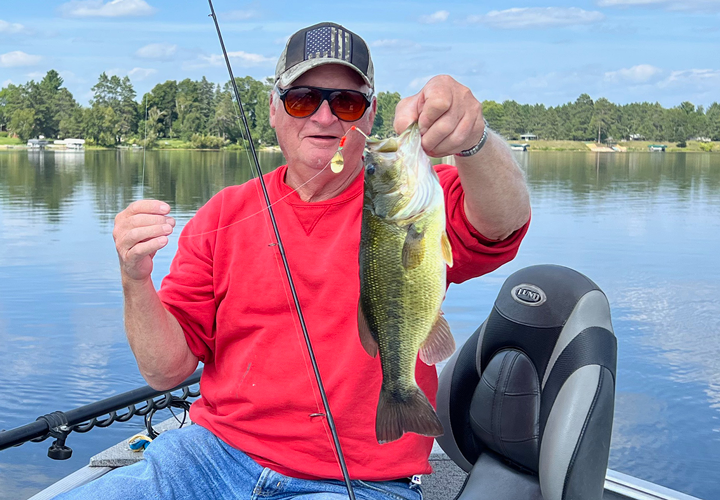 Walleyes, always Kenny’s first choice, have sometimes been cooperative, but like they were on Tuesday, sometimes not. Lake Winnie was stingy that day, giving us enough fish for a meal, but only a handful of keeper perch provided that. A walleye, and a couple of pike were the only fish headed home with my crew. So, on Wednesday, we decided to just go somewhere where could catch some fish. Crappies, bass and sunfish would be the main goal, and walleyes, if we found a few, would be icing on the cake.
At the ramp of a 1000-acre multi-species lake in Hubbard County, the surface water was 75 degrees. The sun was shining, and the water was calm, conditions I didn’t love. Fortunately, the weed growth was still heavy and under a moderate algae bloom, the water clarity was only about 5 feet. It seemed like trolling spinners would be a good first choice presentation, and as it happened, it worked well enough to stick with that game plan for most of the day.
With a variety of weed types, fish species were segregated. Patches of cabbage, wild celery and coontail held some crappies. Sunfish were holding along some of those same weed edges, but seemed to favor the flats, while crappies favored steeper breaklines along the edges. There were numerous patches of eelgrass too, and there were sunfish using that structure as well. Northern pike, little ones, were everywhere and struck at random intervals no matter where we went. One nice walleye, and some healthy largemouth bass came along too, but only infrequently.
I did spend some time searching in open water, over the lake’s main basin 22 to 24 feet deep. There were scattered small schools of what appeared to be either crappies or possibly walleyes. We spent some time using bottom bouncers and spinners out there, but except for more snaky pike, caught nothing in the deeper water.
Back into the weeds, and trolling from spot-to-spot, the panfish action remained decent. But the fish were a bit boat shy, and we’d usually get our best action on the first trolling pass. Every time I attempted to repeat, the action would slow down. Throughout the day, I considered switching from spinners to jigs with small plastic tails. If we’d had enough breeze to drift, I certainly would have tried that. For my crew, the intensity of casting and retrieving the small jigs was not an attractive option. Besides, the spinners were working well enough to justify continuing with that strategy.
All things considered, we had a good day, but we did not harvest limits of anything. Crappies made up the lion’s share of our catch, sunfish were next and there was a nice size, but single bonus walleye.
Despite the summer-like conditions, I could see signs of a transition coming. Weeds were getting soft and uprooted easily. The crappies taking up residence along steeper breaklines is a sure sign that fall is coming too. How fast fall arrives is anyone’s guess but it’s coming and I’ll be looking forward to the change. In the meantime, I'll just keep picking the best spots I can, and let you know how it works out. — Jeff Sundin, The Early Bird Fishing Guide Call-Text 218-245-9858 • Email • Facebook • X • Subscribe Insider Newsletter
August 19, 2026 "Gary Sundin and Friends, Special Music Show"
 My brother and his friends have been working hard on a special musical project. They've been doing lots of rehearsing, and they're ready to perform for you.
I think it's gonna be "A Really Big Show" and if you're anywhere close to the Lakeville MN neighborhood, I hope you'll try to make it there! Read the Brianno's Chart House announcement below for more details.
"Get ready for an unforgettable night at Brianno's Chart House! On August 20, 2026, at 6:00 PM the Party of Eight Presents TAILGATE, a wildly original live music experience packed with crowd-favorite songs, theatrical costumes, Viking lore, and game-day energy the whole family can enjoy. Seats are selected at ticket purchase, and you'll keep the same seat for dinner and the show—see you there!" Contact Brianno's Chart House for more details and dinner-show tickets.
Ely Area, Arrowhead Outdoors Fishing Report August 19, 2026
 "Walleye • Trolling continues to be the name of the game for anglers looking to consistently catch walleyes. Anglers continue to find walleyes out on flats in that 15 to 25 foot depth range, with crankbaits on the smaller side like #5 or #7. Perch, purple and firetiger were popular colors for crankbaits.
If you're struggling to find walleyes, trolling anglers also found walleye hanging out on sunken islands in similar depths in 15 to 25 feet of water. Anglers fishing out here have mainly been trolling lindy rigs, tipped with a crawler, in gold, orange and perch colors. As with both techniques, some anglers are crushing it on either while other anglers are really struggling. Typical August walleye fishing.
Smallmouth Bass anglers continue to report excellent fishing for smallies right now. Beetle spins, spinnerbaits, chatterbaits, in-line spinners, urchins and whopper ploppers are all catching big numbers of smallies right now. Anglers have been focusing on rivers, river mouths, main lake points with large boulders, around islands and sunken islands, again with big boulders. Biggest key here has been the big boulders. Find big boulders, find the smallies.
Panfish • Crappie and sunfish anglers continue to report excellent fishing for both species. Crappies continue to be found around the thickest stands of cabbage you can find during the day. Anglers have simply been dropping hair jigs or jig/twisters on the shaded side looking for active crappies. As evenings approach, crappies will leave the cabbage and actively searching for food in and around weedbeds. When this happens beetle spins, jig/twister or jig/paddle tail, fished 1 to 2 feet below the surface has been deadly.
Sunfish anglers have also been reporting good fishing in the weedbeds. Anglers have mainly been focusing on holes within these weedbeds and weedlines for the sunfish. Red worms fished under a bobber, in these spots, have been deadly!
Stream Trout • Thanks to some cooler days and nights, stream trout reports are really starting to pick up on area stream trout lakes, especially for shore anglers. Several anglers reported catching nice rainbows while floating a crawler about 5 to 10 feet below the surface, during the mornings and evening hours on their favorite lake. Anglers fishing from a boat continue to report easy fishing with cowbells, tipped with a small spoon or small crankbait. Key depth for trolling has been 15 to 30 feet of water, regardless of how deep you are fishing.
Lake Trout • Lake trout anglers also have noticed an uptick in lake trout activity this last week, again likely thanks to cooler daytime and nighttime temperatures starting to cool off the water. Anglers have been finding success trolling large spoons with either dipsy divers or down riggers in that 40 to 60 foot depth range on area lake trout lakes. Anglers fishing from a canoe have been having success vertically jigging large tubes or bucktails while drifting over 40 to 100 feet of water. It's important to note here that anglers jigging aggressively have been catching the majority of lakers here.
Northern Pike • While still somewhat limited on the numbers of big pike reports, anglers are starting to run into some big pike once again while targeting other species. Locations seem to be mixed between shoreline structure and sunken islands, so depending on the location you are fishing will determine what kind of lures you should be using. If you fishing shorelines, large spoons, buzzbaits, large whopper ploppers have all been very effective. Out on the sunken islands it has been a little different story. Large crankbaits, large swim baits and even large tubes have been triggering big pike." — Arrowhead Outdoors, 218-365-5358
Wired2Fish August 19, 2026 "Embracing Electronics to Jig Up Some Summertime Walleye"
 "If there is one thing that has changed walleye fishing more than any new lure or technique over the past two decades, it is the game of electronics. Today’s sonar units allow anglers to locate fish, identify structure, track baitfish, and even watch individual walleyes react to a jig in real time. The technology has worked for years in the bass fishing scene. But now, walleye anglers are utilizing this same form of technology to win big and fill the freezer.
Anglers still catch plenty of summertime fish by trolling and casting, but vertical jigging remains one of the most efficient and exciting ways to target walleyes, especially when using electronics to their full potential. Whether you’re fishing natural lakes, reservoirs, rivers, or the Great Lakes, understanding how to use 2D sonar, side scan, and forward-facing sonar can dramatically increase your success when summertime walleyes set up offshore.
While this is the start of my normal summer routine, I’ve enlisted the help of some of the top walleye anglers around to ..." Read Full Story >> Embracing Electronics to Jig Up Some Summertime Walleye
Lake of the Woods Fishing Report August 19, 2026
 "A strong walleye bite continues across Lake of the Woods, with tons of eaters under 19.5 inches and good numbers of trophy walleyes over 28 inches and slot fish in the 19.5 to 28 inch range mixed right in. Two techniques have been doing the heavy lifting: pulling spinners and crawlers on crawler harnesses, and trolling crankbaits. Here's how it's shaping up across the three areas.
Big Traverse Bay (South Shore)
On the south end, the deep mud is holding big numbers of walleyes. Sizable schools are roaming the basin, and electronics easily pick them up.
Pulling spinners has been especially effective at 1.0 to 1.3 mph. The best colors this week have been gold/chartreuse, gold/pink, pink with a white back, and straight gold. It's worth understanding why spinners produce so well as they deliver flash, color, vibration, and scent all at once, and as you ease along at around 1.25 mph, you're also putting that presentation in front of a lot of fish. Add those factors together and you have a recipe for success.
Crankbaits are putting plenty of fish in the boat too. As a rule, the fish in the basin are in 30 to 35 feet, so the trick is getting your bait down to them. There are several ways to do it. You can use downriggers, leadcore line, snap weights, deep-diving cranks on superline, or a 4-ounce bottom bouncer paired with a 6-foot piece of monofilament and a shallow-diving crankbait.
 Trolled at 2.5 to 3.0 mph this time of year, a crankbait emulates an injured minnow. You pull it through thousands of fish while covering water and locating active, feeding schools. Some walleyes will strike purely on instinct even when they aren't in a feeding mood, this is one more reason trolling cranks is so deadly this time of year.
Rainy River
The Rainy River is giving up a fun mixed bag. Between a resident population of walleyes and good numbers of smallmouth bass, pike, and sturgeon, there's always something to chase. Some anglers target the river specifically this time of year, while others keep it in their back pocket as a solid backup plan when the wind is blowing hard on the big water. Either way, 42 miles of navigable, fish-filled water makes the river a genuinely fun option.
Northwest Angle
Up at the Angle, walleyes are being caught in big numbers on both the Minnesota and Ontario sides. Once again, spinners and crankbaits are catching plenty of fish, though some guides who like to work structure will stick with jigs all summer long and do very well. It really comes down to where you're fishing and whether the fish are spread out or schooled up tight. Whatever the case, good numbers and a mixed bag are the rule among the islands.
Muskie anglers are reporting a good bite. With over 14,000 islands, there is plenty of structure and forage that supports this world-class muskie population. Low light periods have been especially good.
Before You Go
A big thank-you goes out to the Warrior Boats David A. Andersen Memorial Walleye Shootout, which drew 184 boats this past Saturday. The winning bag? Five walleyes for 55.25 pounds — better than an 11-pound average per fish. Lake of the Woods usually produces, and these strong anglers clearly did their part too.
A quick reminder on the regulations: the combined walleye and sauger limit is 6 fish total, with up to 4 being walleyes. All walleyes between 19.5 and 28.0 inches must be released immediately, with one walleye over 28.0 inches allowed in possession. A 2026 Minnesota fishing license is required.
Fishing has been great, and there's still lots of open-water season left to enjoy. Charter boats, guides, and beautiful lodging are available. Plan your trip, come on up, and make some memories. " — Lake of the Woods Tourism, (800) 382-FISH
August 14, 2026 "Happy Campers on Lake Vermilion"
 Lake Vermilion is a busy place right now, boats moving in all 4 directions, many stopping occasionally to wet a line. The Hippie Chick and I are included in that mix, and we’re learning more by the hour.
After 3 years of failed attempts to “go camping”, we are finally doing it. Getting here was not much fun, my new (to me) pickup truck broke down at Hibbing, and we spent all night Tuesday and part of the morning Wednesday waiting for a tow truck. The best news is that my brother-in-law lent us his pickup so we could still make the trip. Despite the aggravation and arriving here a day late, it’s been worth the trouble so far.
We haven’t fished a lot, only 2 hours on Wednesday evening, and maybe 6 hours total on Thursday. In that time, we’ve caught enough walleyes for a nice fish dinner, released a dozen others, and narrowed down some working theories about where to find some more fish today.
 Bottom bouncers, spinners and night crawlers have produced all of the fish we’ve caught. Trolling close to the shoreline, along breaklines dropping into deep water. Fish we located were held in small, tight groups at water depths of 20 to 24 feet; that’s produced our best results. The worst area we fished was the sprawling mid-lake flat in Big Bay. We found some fish in that area last year, but it was very busy on Wednesday evening and produced nothing for us. We observed numerous anglers concentrating on mid-lake reefs and we looked at a couple of them ourselves but found little activity on them; maybe today we’ll try some others.
We’d already enjoyed a meal of walleyes on Thursday afternoon, catching fish was a low priority. So, we set our sights on checking out a spot that our son-in-law told us about. The secret family fishing spot wasn’t too hard to find, with his help, and there were a handful of small fish hiding there. But except for that small spot, the fish population in rest of the bay we explored seemed very low.

Even though there were some small fish on the 16-to-18-foot breakline, it seemed like there was something missing. The water depth, I think, was too shallow for this time of the summer. In the shallower bays we explored yesterday (Thursday) evening, it was hard to find any water deeper than about 20 feet. Contrast that with the better fishing spots we found in the morning where water depths ranged from 28 to 35 feet, and the breaklines, at 20 to 24 feet, held the most fish.
Today, I plan to test the theory by checking out some of the other bays where the water is deeper. If that works out, I’ll be sure to let you know about it.
Something else I observed yesterday had to do with my use of “The Gizmo”, my Mega Live2 sonar. On this day, I almost never saw any of the fish we were catching on the forward sonar. I’ve heard from advanced users before that fish holding closer to the bottom of the lakes are less vulnerable to the forward sonar than suspended fish. Admittedly, I’m lower on the learning curve than many users, but I do think that’s good information. Even when I saw good numbers of fish on my down imaging screen, “The Gizmo” revealed nothing.
Today, I plan to test the theory by being more deliberate about using “The Gizmo”. Hopefully, I’ll move myself a bit further up the learning curve and find some tricks for fine tuning. I’ll be sure to keep you in the loop about my progress, if there is any. — Jeff Sundin, The Early Bird Fishing Guide Call-Text 218-245-9858 • Email • Facebook • X • Subscribe Insider Newsletter
Lake of the Woods Fishing Report August 14, 2026
 "The walleyes remain locked into their deep summer patterns, and the caliber of fish coming off Lake of the Woods right now is turning heads. Numbers have been strong, the average size is impressive, and the trophies are showing up in a big way. Here's a look at the three areas this week.
Big Traverse Bay (South Shore): On the south end, drifting spinners and crawlers and trolling crankbaits have been the go-to methods for most anglers. Both are excellent for locating fish, and once you find a school, things tend to go pretty well — lots of limits have been coming in.
The size structure is what really stands out. Anglers are boxing their eater walleyes under 19.5 inches, but there have been plenty of reports of good-sized slot fish in the 19.5 to 28.0 inch range that must be released, along with many true trophies over 28 inches. Need proof? The Minnesota Tournament Trail held its two-day event on the lake this past week, and the winning team's top ten walleyes weighed an incredible 96.30 pounds. That's a 9.63-pound average across ten fish. In a catch-and-release format, with most teams sharp-shooting big walleyes using forward-facing sonar, that kind of weight leaves no doubt: Lake of the Woods is a genuine trophy walleye lake.
C olors... Hammered gold, hammered silver, gold/red, gold/pink and bubble gum are good colors to start with. Every day can be different based on cloud cover, sunny skies and the forage the fish are pursuing in your fishing spot.
Rainy River: The Rainy River keeps offering up a satisfying mixed bag. The approach for walleyes mirrors what's working on the main lake. Some anglers jig key spots while others troll spinners and crawlers or crankbaits and a variety of species keeps things interesting. Sturgeon season is open as well, with the deep holes holding good numbers of these prehistoric giants for anyone looking to bend a rod on the biggest freshwater fish they'll ever catch.
NW Angle: Among the islands up at the Angle, structure continues to be the key. Walleyes are relating to the humps, reefs, and nearby mud, and the multispecies action is as good as anywhere on the lake — big pike, muskies, smallmouth bass, jumbo perch, and crappies all share the water. With so many spots to explore, a little time on the electronics goes a long way toward finding the day's best bite.
Before You Go: With so many big fish around, it's a good week for a regulations refresher. The combined walleye and sauger limit is 6 fish total, with up to 4 being walleyes. All walleyes between 19.5 and 28.0 inches must be released immediately, with one walleye over 28.0 inches allowed. A 2026 Minnesota fishing license is required. When you do release those slot fish and trophies, a little care handling them goes a long way toward sending them back healthy.
Late summer is a wonderful time to be on Lake of the Woods, and lodging, guides, and charters around the lake are ready to put you on fish. It's a great stretch to plan a trip or maybe you are looking ahead to a fall trip. Lots of options." — Lake of the Woods Tourism, (800) 382-FISH
Ely Area, Arrowhead Outdoors Fishing Report August 13, 2026
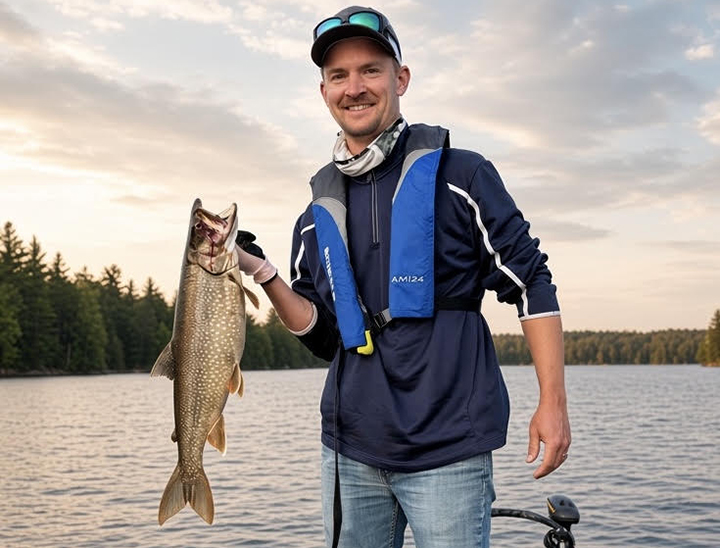 "Lake trout anglers reported having some success this last week trolling with either downriggers or dipsy divers in that 40 to 60 foot depth range. Anglers were mainly trolling with large spoons, over water depths ranging from 50 to 100 feet. Anglers fishing from a canoe were drifting over similar depths, but were more often than not vertically jigging bucktails or tubes.
Walleye - Trolling bite continues to grow in popularity for many anglers this last week, as walleyes remain scattered over deep flats.
Smaller crankbaits in that 2 to 2-1/2 ich size range have been the top producers, when fished in that 15 to 25 foot depth range. During that last hour of daylight anglers have been trolling about 10 to 15 feet down over 35 to 70 feet of water for trophy walleyes. These walleyes out over deep water looking for ciscos.
Trolling hasn't been the only way to catch walleyes. Early in the morning, anglers are having good luck fishing with leeches either in a spinner rig or a jig, in 15 to 25 feet of water. As the sun gets up it definitely seems crawlers start working better. Regardless of the bait, these anglers have been focusing on sunken islands, again in that 15 to 25 feet of water. Hot colors were firetiger, perch and gold.
Smallmouth Bass - Classic summer pattern continues on Ely area lakes. What this means for anglers is topwater early in the mornings, along shorelines in that 5 to 10 ft range. As the sun gets up spinners, chatterbaits, urchins, in-line spinners and crankbaits, fished a little deeper in that 10 to 15 foot depth range. Larger boulders you can find the better as bass love to hide between them.
Panfish - Crappie anglers continue to report that they are finding active crappies in and around cabbage beds. During the day the thicker the cabbage the better as crappies will set up on the shady side of the cabbage stand waiting for bait to come by. Anglers have been having great luck dropping jigs with twisters or hair jigs on the shady side. As the sun starts to go down, crappies will break away from the cabbage and actively start looking for food around weedbeds and weedlines. This is when baits like beetle spins, jig/twister and jig/paddle tail, fished 1 to 2 feet below the surface are really effective.
Stream Trout - Stream Trout anglers continue to report easy fishing for rainbows this last week. As with last week anglers had really good success trolling small crankbaits or spoons behind cowbells in that 20 to 40 foot depth range. Anglers fishing from shore have had success floating a night crawler 2 to 5 feet off the bottom." — Arrowhead Outdoors, 218-365-5358
Lake Winnie Cutfoot Sioux Fishing Report August 11, 2026
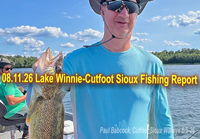 "We’re on the verge of seasonal change; mid-summer giving way to the late-summer, early fall migrations. It seems too early for the “fall-bite”, and for now, it is, but fishing reports from guests and friends reveal glimpses of what lies ahead.
Walleye fishing, depending on the angler who reports it, is good, bad, or somewhere in-between. The upshot is that when you locate the “right school” of fish, you will be rewarded with good action. The wrong school of fish, an inactive one, will frustrate, giving the impression that all the fish in the lake are simply not biting.
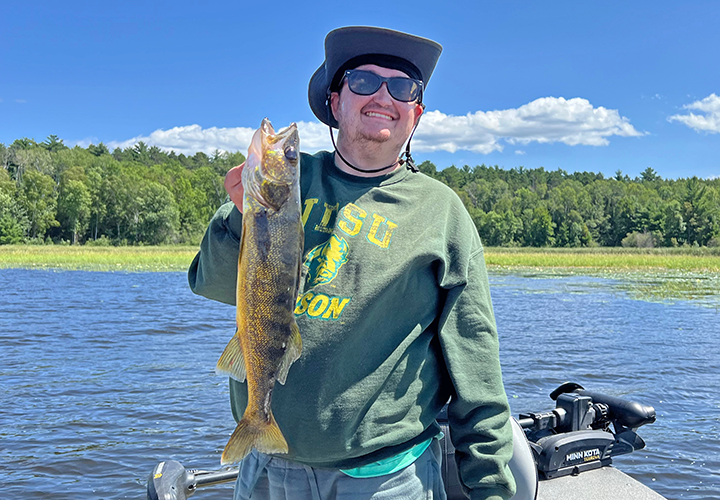
Somewhere between the two extremes are the anglers who locate small, isolated spots that hold singles, doubles, or smaller schools of fish. Often, the non-traditional locations anglers find are the places that provide the best surprises. The photo of Jake Hamilton, above, shows a nice Little Cutfoot Sioux walleye that was hiding along the edges of lily pads and wild rice. Trolling through the vegetation using spinners tipped with a minnow fooled that fish.
At the same time, there was another group of anglers fishing on the southeast side of Winnie, along the shoreline in water depths of 6 to 7 feet and having a great ..." Read >> Bowen Lodge Lake Winnie Fishing Report August 11, 2026 August 7, 2026 "What is a Ned Rig?"
 Q) Roger Prescott wrote; “Jeff, I was interested in your recent article about the family who caught those big bass using what you called Ned Rigs. I’m not familiar with that lure, and wonder if you’d tell me more about what they are, and how to fish with them?
A) Roger, the Ned Rig is an amazingly simple and effective way to trigger strikes from both largemouth and smallmouth bass.
It’s essentially a modification of the old “mushroom jig” and plastic worm combination that were popularized in the 1980s by Conrad Peterson of Gopher Tackle. The jig heads are flat nosed, stand-up style lures that are available in various weights, the 1/8-ounce size is my favorite, and pictured here. The departure from the original jig worm presentation is that instead of using twirl tail style plastic worms, the Ned Rig incorporates a short, 2-1/2 to 3-1/2 inch Senko style worm.
The presentation, I believe, mimics the motion made by darting crawfish. We make long casts toward structure and retrieve the lures using a sharp sweep-drop-sweep-drop motion. The bass usually hit the lures as they fall back after the sweeping swim forward. Most often, the hook set occurs “on the sweep”.
I know there are a lot of ways to catch a bass, and admittedly, I’m not the expert on all of them. But this lure has been so effective that it is fast becoming my favorite presentation. In the hands of my customer, Patrick Patterson, Ned Rig outperformed most of the alternative presentations I chronicled in the report (July 30, 2026) you referred to. Last year, a similar performance occurred too, and that was the subject of a report (August 1, 2025) as well.
Purchasing a kit like you see pictured above is a good way to get started, but you wouldn’t need to buy that many. For beginners, I’d suggest picking up a few 1/8-ounce jigs and a single package of green pumpkin-colored worms. That size and color combo will definitely get bit and help launch your new career as a Ned Rig aficionado. Once you’re hooked, pun intended, you can expand your selection to match the environment of your favorite bass fishing lakes. — Office Call or Text 218-245-9858 or EMAIL or Facebook or X
August 6, 2026 "Navigating the Navigate-Able"
 Fishing presentations are like clothing, we tend to settle on the ones that make us most comfortable. The same handful of “tricks” that work for me, don’t always fit another angler’s fishing style. Knowing this helps explain why fishing guides, me included, rely on selecting a few basic and time-proven strategies for capturing fish.
For my customers, the mixed-bag, trolling presentation that I talk about so often is like wearing a comfortable sweatshirt. Throw the spinner into the water, let Jeff figure out where to put the boat and then wait for a fish to bite. Simple as 1, 2, 3, right? Yes, most of the time.
On Wednesday, the fishing experience was very similar to what I described in the Tuesday FishRapper report. Surface water temperatures ranged between 74 and 75 degrees, about 6 degrees cooler than they were before the cold front. Again, trolling over the shallow weed tops produced a lot of action, but most of the fish were small. Occasionally, when I could get the boat into just the right pathway, somebody would hook into a good fish.
The pathway where larger fish were held was slightly deeper, and just outside of the main weed beds. For most of the day, I’d say that the “magic depth” was about 9 to 10 feet deep. Most days holding depth is no problem for me, but yesterday, it was a struggle.
The struggle was caused by a moderate wind from the southwest. When you look at any map of the lakes in our region, you’ll see that most of our lakes lie in a distinct southeast-northwest orientation. That same orientation affects the lake’s structure too. So, in a northwest wind, drifting or trolling along a shoreline is usually easy, and so is following structure with a southeast wind; they just match the direction of the structure better. For a boat operator, fishing in west, or east wind just feels off, and like clothes that don’t fit right, is annoyingly uncomfortable.
The solution, most of the time, is to deploy a drift sock and use it to help steady the course of travel. Mine, a 60-inch drift control model is highly effective, especially in strong winds. When using a drift bag that is this large, it’s better to use the outboard motor instead of the electric. It has more pulling power, and sometimes I think the propwash stirring things up makes the fish bite better. So, if you find yourself in an awkward position, consider the drift bag option to help keep you on a steady course.
For me, small spots, isolated patches of weeds and small, random pods of fish made using the drift sock impractically cumbersome. So, I just had to make do with some excessive twisting and turning. Fortunately, my crew, Paul, Ben and Jake were understanding, and tolerant of my shortcomings as a coxswain. In the end, we managed to assemble a respectable mixed bag of walleye, sunfish, pike and perch.
The walleyes, most of them, came from the outer edges of weeds. The clean lip or flat lying adjacent to the heavier weed patches was the key location. Keeping the boat in the narrow band of 9- to 10-foot-deep water as they trolled spinners tipped with fatheads was the only way to catch the better fish. Too deep and small perch became a problem, and too shallow brought out the legions of tiny sunfish that were waiting to consume our live bait supply. I can’t help but think that if I’d had an easier time holding that key depth range, my crew would have caught even more fish than they did.
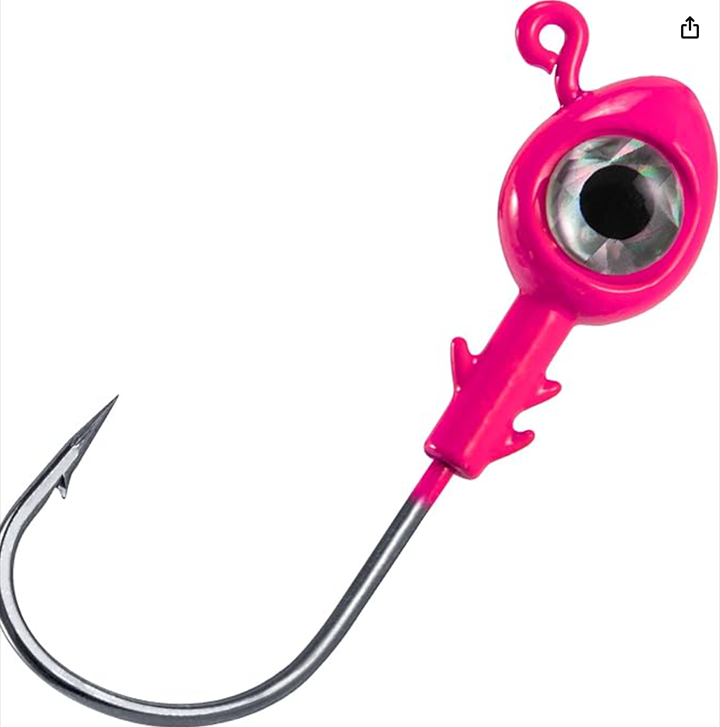
There weren’t many crappies in the lake we fished yesterday, so I didn’t try jigging the weed edges like I did on Tuesday. But I did promise yesterday to share more details about the crappie lures that worked well that day. Here are images of the 1/8-ounce Doctor Fish jig heads and the Strike King’s Mr. Crappie Slabalicious Paddle Tails that we tip them with.
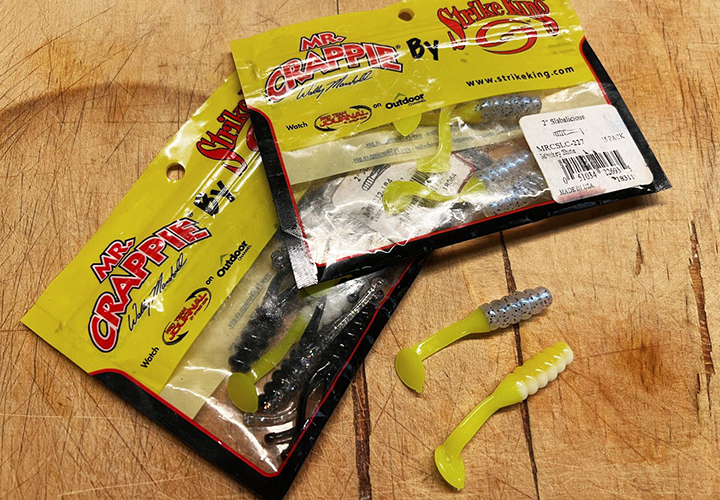
Like I mentioned yesterday, there were other plastics that worked too. Berkley’s Power Nymph, and Ripple Shads caught some fish, so did some of the Garland lure choices. I like Dr. Fish Jig Head because their flat, minnow head shape keeps them running true, and the multi-prong keepers hold the plastics tight. I’m not proud to be buying these on Amazon, but like you, nobody gives me this stuff for free, and I have to shop for the best value I can get. So, for now the Amazon link is the best source I can find.
The presentation we used was to cast the lures along the breakline and allow them to swim along the weed edges as we drifted. We didn’t retrieve them unless a fish struck, or they became fouled with vegetation. A slight lift-fall-lift-fall motion was all we needed to keep the tails moving to attract strikes.
— Jeff Sundin, The Early Bird Fishing Guide Call-Text 218-245-9858 • Email • Facebook • X • Subscribe Insider Newsletter
Lake of the Woods Fishing Report August 6, 2026
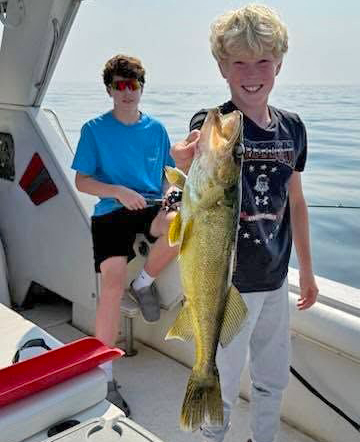 "August carries a reputation as the "dog days" of summer. But August is a fantastic month for walleyes on Lake of the Woods. When the walleye bite on a lot of lakes slows to a crawl, L.O.W is often crankin'. Summer patterns are still firmly in place and anglers are finding lots of fish willing to cooperate. Here's a look at how the three areas are shaping up this week.
Big Traverse Bay (South Shore)
When you find a school, jigging is hard to beat right now. Anglers are doing well in 30 to 32 feet with a jig tipped with a frozen emerald shiner, a minnow, or a piece of crawler. Others are staying on the move and reporting good success pulling spinners and trolling crankbaits, which are great options for locating scattered fish and covering water to find fish.
Colors this week... For spinners and jigs, bubblegum, gold and pink, and gold and red have been the standouts. Colors in general can change day to day depending on water clarity and whether it's sunny or cloudy. For crankbaits, as a general starting point, shiny gold, chrome/blue, pink UV firetiger, and chartreuse are all worth trying. Let the fish tell you which one they want, then run with it.
Rainy River
The Rainy River continues to serve up a mixed bag, and the approach mirrors what's working out on the lake. Some anglers are jigging key spots, while others are trolling spinners with crawlers or crankbaits. Whatever the method, a variety of species are being caught. Sturgeon season is open, and the deep holes are holding these prehistoric giants for anglers looking to tangle with the biggest freshwater fish they'll ever catch.
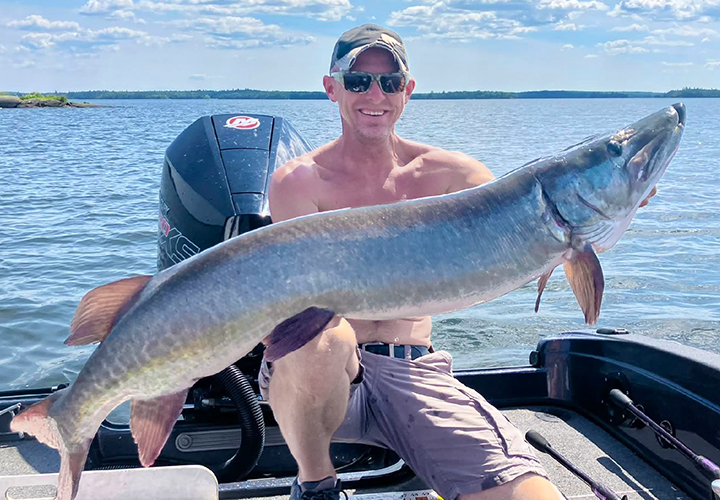 Northwest Angle
Up at the Angle, structure is the key this week. Humps and sunken islands on the Minnesota side have been holding good numbers of walleyes, and pulling spinners tipped with a crawler has been an effective way to catch them. A good tactic here is to use your electronics to see if fish are present and what part of the structure they are holding. Start deep, work up and over the top of the bar, then back down the other side. That lets you figure out whether walleyes are home and, just as important, which part of the structure they're living on that day.
Muskies, pike, smallmouth bass, jumbo perch and big black crappies are also being caught amongst the 14,000+ islands in the area.
A quick reminder on the specific fishing regulations for Lake of the Woods. The combined walleye and sauger limit is 6 fish total, with up to 4 being walleyes. All walleyes between 19.5 and 28.0 inches must be released immediately, and one walleye over 28.0 inches is allowed in posession. Lots of "slot" fish are being caught which provide a great fight and a good pic for memories.
August and September are excellent months to fish Lake of the Woods. Some cool mornings and warm afternoons, and (hate to even mention it) fall right around the corner. It's the perfect stretch to get in one more summer trip before the seasons turn, so make your plans now. Lodging, guides, and charters around the lake are ready to help." — Lake of the Woods Tourism, (800) 382-FISH
August 5, 2026 "Are the Dog Days of Summer Behind Us?"
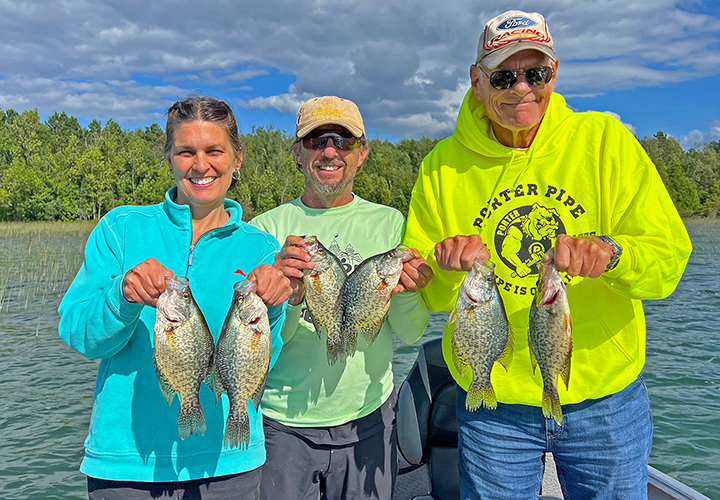 Yesterday, I wrote that the dog days of summer would soon be behind us. Today, I’ll offer that the dog days of the 2026 fishing season ARE now behind us.
A moderate level cold front that passed though north central Minnesota overnight Monday, into Tuesday morning. The front triggered thunderstorms and brought in a chilly west-northwest wind which churned surface water on area lakes. On July 29, 2026, my most recent visit to the lake we fished yesterday, the water temperature was just over 80 degrees. By yesterday morning, the surface temperature had fallen 6 degrees, now registering 74 degrees. That cool-down didn’t kill the crappie and sunfish bite, but it did transform it.
Last week, and for most of the past month, trolling spinners tipped with live bait has been the mainstay presentation for I, and most of the other fishing guides in my region. Yesterday, trolling spinners was a fine way to trigger strikes from tiny fish but didn’t produce significant numbers of the “keeper” size fish we sought. At first, I was ready to blame it on the change of weather, but the overall activity level of the fish didn’t seem to match that narrative.
What happened is that larger crappies, sunfish and bass dropped out of the shallow weed cover and formed small, tight groups along the deeper base of the weeds. Now holding in 14 to 18 feet of water, those fish were no longer vulnerable to the spinners trolling through the shallower weeds. An experiment, swapping our spinner rods for lighter weight gear and jigs tipped with plastics turned the day around. The deeper fish were active, and the revised game plan produced our desired results.
There were several plastic tails and jig head combinations that worked but there was one combination that produced better results than the others. A 1/8-ounce Doctor Fish jig head tipped with Strike King’s Mr. Crappie Slabalicious Paddle Tail turned their heads the best. Drifting along the weed edges in water depths of 12 to 16 feet, we cast the lures about 25 feet away from the boat and allowed them to swim along with the drift. The crappies, bass, sunfish and rock bass that I was prepared to declare inactive, were now biting aggressively.
I’m pressed for time this morning and can’t take time for more details. I promise to finish adding details to this article and provide an update about what I learn today, on my fishing charter. In the meantime, keep in mind that some of the mid-summer fishing patterns you relied on last week, may be transitioning into later summer, early fall patterns this week.
Let us know what you’re observing too, are the lake’s weeds, water temperatures or clarity changing? Are fish in your favorite lake moving, or are presentations changing? — Jeff Sundin, The Early Bird Fishing Guide Call-Text 218-245-9858 • Email • Facebook • X • Subscribe Insider Newsletter
Ely Area, Arrowhead Outdoors Fishing Report August 5, 2026
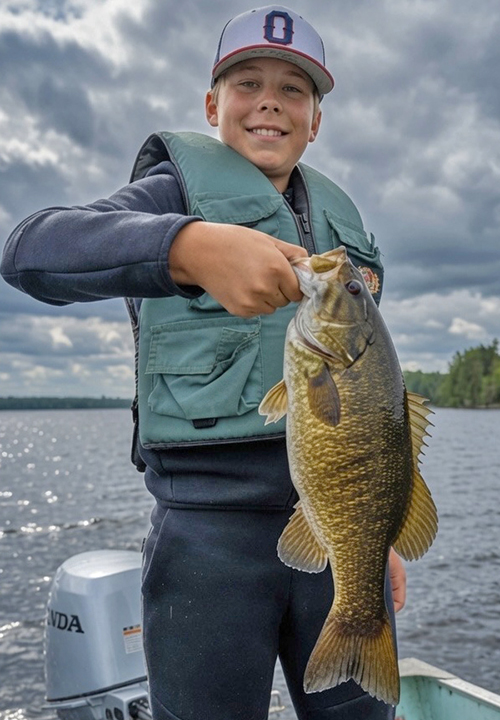 "Walleye anglers reported a generally tough bite happening this last week. Anglers having success were generally covering ground to find active bites. Trolling #5 or #7 crankbaits, with leadcore fishing line, in that 15 to 25 feet of water, over large flats, has become the most effective way to catch walleyes right now.
Colors to have on hand are white, perch or yellow perch. Other anglers have been having luck trolling spinner rigs tipped with either a leech or a crawler. Which works better really depends on time of day, the lake and current weather conditions. Leeches might crush for an hour, then catch nothing the rest of the day.
Smallmouth bass fishing continues going strong across the area. Anglers continue to report a good early morning top water bite along shorelines, river mouths and in rivers. As that sun gets up anglers have been switching to paddle tails, urchin baits, chatterbaits, spinnerbaits and crank baits to keep catching numbers of smallies. Rivers, river mouths, large rocky flats and around sunken islands in that 6 to 20 feet of water, have been producing numbers of fish.
Crappie anglers continue to report good fishing for crappie on many Ely area lakes. Crappie anglers continue to find active crappies around thick cabbage, downed trees or standing timber. Anglers have been fishing with beetle spins, jig/twister or jig/paddle tails. That last hour of light continues to be the best time for the hottest crappie fishing.
Sunfish anglers also are reporting that they are finding good fishing. Many of these anglers have been finding sunfish in sparser weeds and pencil reeds. Oftentimes the best depth to find them has been in 3 to 6 feet of water. Red worms and wax worms, fished under a bobber have been best, but if you're looking for sunfish, start with a small beetle spin or twister. Covering water to track down fishing can be the difference in a slow day of fishing or a great day of fishing.
Stream Trout anglers reported good fishing for rainbow this last week. Due to the warm water temps, the best fishing was found around 15 to 20 feet of water during the early morning, but as the sun got up and water temperatures rise, rainbows dropped down to 40 to 50 feet of water. Anglers mainly trolled with cowbells, with a small brightly colored crankbait or small spoon to catch these trout.
Many northern pike anglers reported good pike fishing, but as usual for this time of the year, poke over 32 iches were few and far between. Trolling large spoons, crank baits or large swim baits along weed lines often resulted in very consistent fishing for anglers. Early mornings have been the best time for numbers and size." — Arrowhead Outdoors, 218-365-5358
August 3, 2026 "Mastering Mixed Bag Fishing Zones"
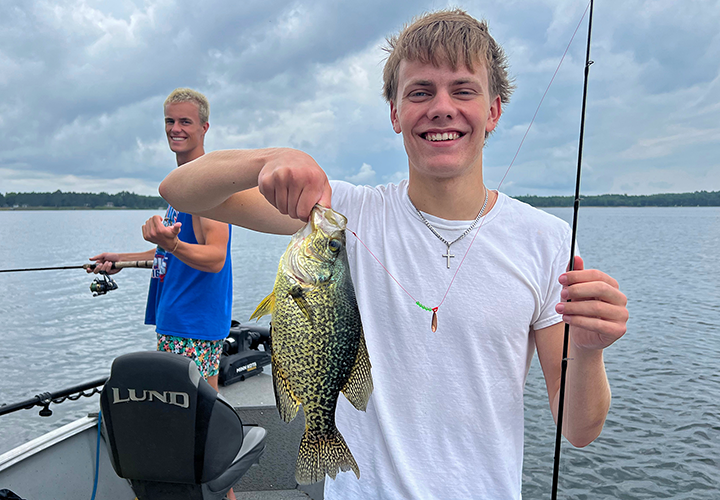 Well, “The Dog Days” of summer, among my favorite times of the year, will soon be behind us. Despite a seemingly endless string of hot days, surface water temperatures have already peaked, and are slowly trending down. Algae blooms, resulting from the heat and sunshine are heavy and that’s helpful to anglers. But for fish, the zooplankton consumes oxygen and, in some lakes, threatens deep water habitats.
During early and mid-summer, mid-lake structures offer both food supplies and plenty of oxygen. Combine that with the lower water temperatures, and cool water species like northern pike, and walleyes thrive in deeper regions of most lakes. Take away the oxygen, and then the food, and it’s understandable why predators leave these regions of the lakes too.
Fish deal with changing conditions in different ways, and locations vary from lake-to-lake. Some fish are now suspended over open water at the thermocline and that’s a subject for another time. Many fish, in a lot of lakes migrate toward weed growth, and for me, that’s the pattern I’m focused on these days. My most recent guided trip, fishing with the Freitag family, is a perfect example of what I love about fishing in the weeds.
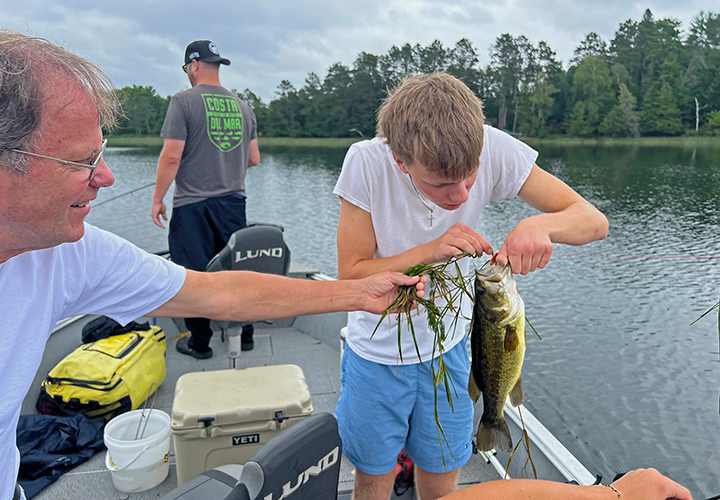 The fishing pattern, trolling spinners tipped with minnows and worms, is both familiar, and well reported. So today, let’s not worry about how we caught fish, but instead, let’s focus on where the fish were located; in the weeds!
Pictured here, Finn Freitag, with the assistance of his grandpa ED, sort through a bunch of weeds to find the hook in a largemouth bass. The weeds, Fries' Pondweed (Potamogeton friesii) I think was the key vegetation for finding bass on this trip. Bass don’t always select a single weed type like they did on this day; they’ll use a wide variety of weeds for cover. Whenever there are rocks or gravel present, bass will be there and I think that in open water, it’s the rocks that attract them more than the vegetation type.
- Crappies, found along the same shoreline, seemed to prefer smaller, more isolated patches of Claspingleaf Pondweed (Potamogeton richardsonii) weeds. The Claspingleaf pictured here, is often just called “cabbage” and is one of the common weed types we find in north central Minnesota lakes. The term cabbage could also include Broadleaf Pondweed or Curly leaf Pondweed and others. More classic vegetation types where I find crappies often include Flat Stemmed Pondweed and Coontail. Almost any weeds that provide vertical cover, and have gaps, or open spots between plants are worth checking out for crappies.
- Sunfish, on this day, were more flexible about their habitat, and were found in a variety of cover types. Like the bass, finding the preferred substrate is more important than locating any specific vegetation. Insect eaters by nature, sunfish often seek out areas where marl, the semi-soft, clay and sand mixture provides breeding ground for bugs. If you find a good bug hatch in a marl substrate, you will find sunfish no matter what the weeds surrounding them.
- Walleyes and northern pike like some open space between the seeds too. Cabbage, in many lakes, will attract both species. Just remember that a northern pike relates more closely to the cover than the walleyes do. On a recent trip, walleyes were held at base of the cabbage, in the open spaces between the stems. Pike were holding in the leafy part of the plants, floating higher in the water column.
- Perch, especially during late summer and early fall are commonly found in American Eelgrass (Vallisneria americana). I know they can be found in other weed types too, but the eelgrass is the single cover where my fishing customers catch the most, and the largest perch year after year. When the eelgrass is mature and healthy, we can usually find perch among them.
Okay, that’s a good starting point for identifying some of the cover types that fish species prefer. Always remember that individual lakes offer other, more specialized situations. The truth is that weeds are weeds, and they all provide cover for something. I recall a MN DNR meeting where one resort owner from Lake Winnibigoshish saying that “any weed is a good weed.
I think he was right, although AIS inspectors and fish biologists don’t like certain varieties of vegetation because they are not native to Minnesota lakes. Even scary sounding vegetation types like “Starry Stonewort” or “Eurasian Milfoil” can provide good habitats for fish. Years later, in a private conversation with a fisheries biologist, I mentioned that walleyes, in Winnie, seemed to like Starry Stonewort. His reply, “Because it’s an invasive species, so we avoid using the term “walleyes like it”. “But I can say that we’ve observed that walleyes do use it.”
Whatever type of weeds you encounter, watch for baitfish, insect hatches or comforting shade that any stand of vegetation provides. There’s a good chance that predators, maybe the ones you’re looking for, are taking advantage of the opportunity. — Jeff Sundin, The Early Bird Fishing Guide Call-Text 218-245-9858 • Email • Facebook • X • Subscribe Insider Newsletter
Wired2Fish August 2026 "Learning to Use Technology, and Understanding Crappies Better in the Process"
 "Don’t believe that adage about not being able to teach an old dog new tricks. Richard Bowling, a popular fishing guide at Truman Lake in Missouri, is a good example of how wrong that way of thinking can be. Bowling, a longtime guide on Truman Lake in Missouri, uses forward facing sonar to unravel some of the mysteries about crappie behavior.
After more than 30 years of guiding for crappies, he thought he had a good handle on what makes the species tick. Then live scope, which shows the real-time movement of fish, came along in the late 2010s. Even Bowling was amazed at everything he learned after that. Location, Location, Location
If it’s a crappie, it has to relate to brush, flooded timber, or weeds, right? Wrong. That was the old-school way of thinking. But Live scope has since revealed that crappies are quite comfortable living in ..." Read Full Story >> Learning to Use Technology, and Understanding Crappies Better in the Process

You Are Invited To Become A Duly Deputized Fishrapper Cub Reporter Too!
 If you've been waiting for a gold engraved invitation to participate in the daily reports, then stop waiting and consider this your own personal invitation.
Helping your fellow fishermen and women stay abreast of fishing conditions in your area is good for everybody and it's easier than you think! You don't have to write a book, you don't have to share your secret fishing spots and you don't even have to mention your lake. You see, with just a few words about general trends, seasonal patterns or local weather conditions you can help steer your fellow anglers to more gratifying fishing experiences. So, be like Dan and Sean, and become a duly deputized "Cub Reporter", it's good for fishing and that's good for everybody!
Use the Contact Us page, or if you prefer to be "social", use our community page on facebook Fishing Reports Minnesota, that is the Facebook counterpart to this page and it is open to the public, so you can post your own fishing update or just share a photo of a nice catch.