
 February 26, 2026 "MN Fishing License, Renewing the Renew-Able"
 I’m not a forgetful person; in fact, my memory is good. What I am though, is a “scatterbrain”, tending to be disorganized and focused on too many things all at once. I think about getting one job done, then getting distracted by other tasks that demand equal attention.
If that sounds familiar to you, then you may appreciate the reminder that your Minnesota fishing license will expire this Saturday, February 28, 2026. That’s right, we’ll all need new fishing licenses beginning on Sunday March 1, 2026. So, if you have weekend plans like Susan and I do, renewing the license early on Sunday could present problems.
The last thing I need is to ruin my wife’s weekend fishing trip with a citation. So yesterday I logged on to my DNR account and purchased our 2026 licenses. For me, the system that works best is to buy the license online, download the PDF and print several copies. I keep one copy in the boat, one in the truck and one in my wallet. And since Minnesota allows “electronic versions” of our fishing license to be presented on our smart phones, I keep a PDF copy on my phone too. No matter where I go, if I pick up a fishing rod, I’m covered.
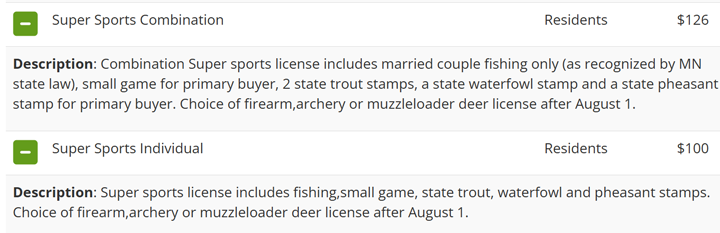 This year, while I was looking through the list of license options, I noticed the “Super Sports License”. This is possibly the best bargain for outdoor enthusiasts on the market. For $100, the individual license includes the annual fishing license, the annual small game license, a MN state trout stamp, MN state waterfowl stamp and your MN state pheasant stamp. Plus, the super sports license covers your choice of either a firearm, archery or muzzleloader deer license. All you need to remember is to log back in after August 1 to redeem your choice of the deer license at no additional charge.
For Susan and I, the super sports combination is the perfect season-long solution. The combination version of the license includes married couple fishing only (as recognized by MN state law), small game for primary buyers, 2 state trout stamps, a state waterfowl stamp and a state pheasant stamp for primary buyers. The choice of firearm, archery or muzzleloader deer license after August 1 is offered only to the primary buyers.
For a grand total of $157, I purchased
- Minnesota Annual Fishing Licenses For 2 People
- 2 Minnesota Walleye Stamps, one for each of us
- 2 Minnesota Trout Stamps, one for each of us
- 1 Minnesota State Pheasant Stamp for me
- 1 Minnesota State Waterfowl Stamp
- 1 Minnesota State Small Game License for me
- 1 Minnesota State Deer Hunting License for me
Okay, monetary value is one thing but knowing that I’m covered for almost everything is the key feature. For a scatterbrain like me, having one piece of paper that covers most of my fishing and hunting for the whole year is fabulous. It means I can relax about buying licenses and pay more attention to whatever it is that grabs my attention next!

While I was logged in to the license page, I renewed my boat license too. Spring is coming fast, so if yours is due this season, you might as well get it done while you’re thinking about it. For your convenience, use this link, or click the image to renew your Minnesota Fishing, Hunting or Boating License right now.
 — Jeff Sundin, The Early Bird Fishing Guide Call-Text 218-245-9858 • Email • Facebook • X • Subscribe Insider Newsletter
 Wired2Fish February 26, 2026 "How State Fisheries Regulations Are Made"
 "I started working in fisheries and aquatic management after graduating college, often hearing anglers’ familiar complaints at the boat launch or bait shop. I’ve just about heard it all, things from “These regulations don’t make any sense!” to “The size limits are out of control!”
The truth is, to anglers, it can look like people who don’t fish wrote a bunch of these rules.
But the reality is far different. State fisheries regulations are the end result of years — sometimes decades — of biological data, fieldwork, modeling, and public input. They’re not perfect and they’re always evolving, but every regulation has a scientific foundation. Understanding what goes into making them helps explain why those rules exist in the first place.
Everything starts with data. Fisheries agencies collect enormous amounts of ..." Read Full Story and Learn More >> How State Fisheries Regulations Are Made

 Lake of the Woods Ice Fishing Report February 25, 2026
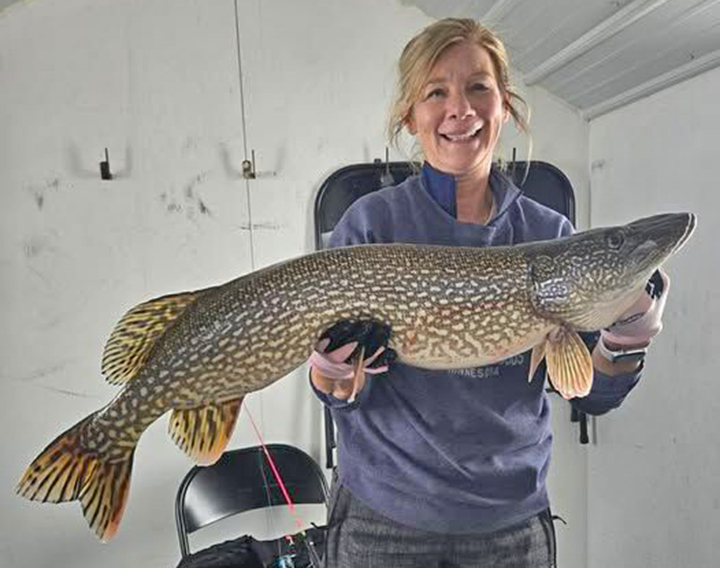 "Lake of the Woods ice fishing continues to deliver with outstanding conditions across the South Shore, Rainy River, and Northwest Angle. Ice conditions this winter have been exceptional—we're now seeing more than 30 inches of ice in most areas of the lake, and recent cold weather continues building that solid platform beneath us.
Resort ice roads are not just maintained—they're impressive. Many of these roads now extend more than 20 miles out onto the lake, providing safe, reliable access to prime fishing grounds. As always, work through a reputable resort or outfitter who understands current ice conditions, weight limits, and where the fish are holding. They'll keep you safe and put you on fish.
Extended Seasons on Lake of the Woods - Come Ice Fish With Us in March! While the walleye and pike season across Minnesota's inland waters is now closed until the fishing opener, Lake of the Woods is border water with Canada and our season is still open!
- Fish houses can remain out overnight through March 31, 2026. Walleyes and saugers are open through April 14, 2026 across most of Lake of the Woods.
- Four Mile Bay and Rainy River: walleyes and saugers are catch and release from March 1 through April 14th
- Northern Pike season never closes, anglers are allowed to fish for pike year-round.
- Perch, crappies, eelpout, and tullibees remain open.
- Lake Sturgeon are catch and release through April 23, 2026. Beginning April 24 through May 7 is the harvest season (1 per calendar year. Fish must be 45 to 50 inches inclusive or one over 75 inches. Fish must be immediately tagged/endorsed and registered within 48 hours). May 8 thru 15, 2026 is again catch and release and the season closes May 16, through June 30, 2026.
There's still plenty of season ahead, and plenty of opportunity to get out here. Contact a Lake of the Woods resort and set up your trip in one of their many heated fish houses positioned on schools of walleyes and saugers. You'll be fishing in comfort while the resorts do the heavy lifting.
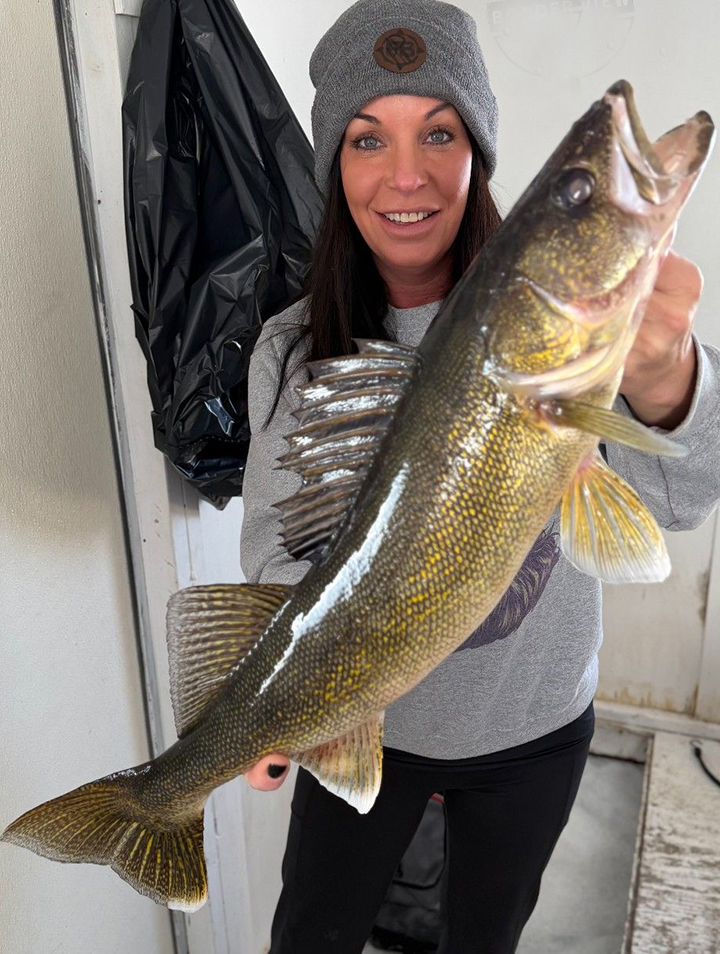 South Shore Ice Fishing Report – Picking Away at Quality Fish in 28 to 32 foot range. The South Shore continues to deliver solid ice fishing. Resort ice roads adapt and extend as needed, keeping anglers positioned on active fish throughout the season. Most fishing activity remains concentrated in 28 to 32 feet of water, where we're picking away at quality catches day after day.
It isn't a slamfest, but for February ice fishing, anglers are steadily picking away at various sized walleyes, saugers, good numbers of jumbo perch, some eelpout, and pike. This is Lake of the Woods doing what it does best: providing variety and opportunity. Most anglers are finding some nice fish for a fish fry or to take home to loved ones.
You'll sort through some smaller fish, that's part of the game on a lake loaded with multiple year classes. But you'll also connect with nice keeper walleyes and saugers, slot fish between 19.5 - 28.0 inches that need to be released, and maybe even a trophy or two.
The mixed bag is as strong as ever. Along with walleyes and saugers, we're seeing good numbers of big jumbo perch, eelpout, tullibees, pike, and even the occasional sturgeon. It's Lake of the Woods—you never know what's coming up the hole next, and that's part of the magic.
The walleye and sauger Limits on Lake of the Woods is a combined total posession limit of 6 fish, with up to 4 of the total being walleyes. All walleyes measuring 19.5 inches to 28.0 inches must be released immediately. Anglers may posess one walleye over 28.0 inches.
Remember: Four Mile Bay and Rainy River are catch and release only for walleyes and saugers from March 1 through April 14, 2026.
What's Working?
The classic one-two punch continues to be the go-to approach: run an active jigging rod to draw fish in and trigger strikes, paired with a deadstick with a live minnow set 6 inches to a foot off bottom for fish in a more neutral mood.
Jigging line: Rattle baits like the Rapala Rippin Rap have been producing some nice fish—try the pink UV Firetiger or gold. Also, jigging spoons with a minnow head continue to work well. If fish are finicky or lethargic, slow your jigging cadence and/or downsize your presentation.
Deadstick: A small jig or a plain hook with a live minnow 6 inches off the bottom has been consistent and continues to produce.
Big Northern Pike Are Active:
Anglers who enjoy targeting world class pike are already reporting good action on tip ups and quick strike rigs. Traditionally, live suckers or a good dead bait will get the flags flying. March is a key month to target big pike as they put the feedbag on and begin staging for the upcoming spawn. Sounds like some pike are already starting! Contact a Lake of the Woods resort for fish houses set up in areas specifically where there are pike. Remember—pike season never closes on Lake of the Woods.
Rainy River Ice Fishing Report, Focus on the Golden Hours
River ice requires extra caution due to current. Always fish through a resort or outfitter who knows the river and can provide safe access. While most ice fishing activity is on the main lake, the Rainy River continues to reward anglers who target it strategically. The best walleye action happens during the "golden hours"—the first couple hours of daylight and the last couple hours before dark.
Important: Rainy River walleyes and saugers are catch and release only from March 1 through April 14th. Sturgeon are being caught for those pursuing catch-and-release opportunities. The sturgeon catch-and-release season runs through April 23rd, when the harvest season opens April 24 - May 7.
Northwest Angle Ice Fishing Report
Quality Action in 24 to 32 feet of water. The Northwest Angle is producing excellent fishing right now. The ice road from Young's Bay to the island resorts is in great condition, and fish cleaning houses are staying busy with quality catches.
Most productive fishing is happening in 24 to 32 feet of water. The one-two punch of an active jigging line and a deadstick continues to work well. Anglers are consistently picking away at walleyes, saugers, good numbers of jumbo perch, pike, eelpout, and tullibees—a true Lake of the Woods mixed bag.
Ice conditions remain excellent across the lake with more than 30 inches in most areas, ice road systems extend more than 20 miles and are exceptionally well-maintained, and fishing has been consistent for February. Whether you're planning your first ice fishing trip of the season or looking to get out during March, Lake of the Woods has the resorts, heated fish houses, guides, and fishery to deliver a memorable experience." — Lake of the Woods Tourism, (800) 382-FISH
Ely Area, Arrowhead Outdoors Fishing Report February 25, 2026
 "Lake trout - Lake trout anglers continue to report some great fishing, with a few really big fish mixed in with the reports. Anglers continue to report that sunken islands, that top out in 15 to 35 feet of water, are the best place to find lakers. Chartreuse bucktails, red/white tubes and either a dead herring laying on the bottom or two minnows on a treble hook, about 2 to 3 feet off the bottom have all been very effective.
Stream Trout - Anglers fishing popular stream trout lakes continue to report seeing lots of trout in the lakes and some good fishing. Small jigs or spoons, tipped with wax worms or a dead minnow, continue to work. Pink, white, and purple were the most popular colors used by anglers. Depths continue to be the same 5 to 15 feet under the ice, while fishing over 20 to 70 feet of water.
Eelpout - Lots of anglers set out in search of eelpout as we get close to the peak of the spawn on area lakes. Many anglers fished sunken islands that topped out in 15 to 25 feet of water. Anglers used heavy jigs or spoons tipped with dead minnows, smelt or herring and simply pounded the bottom to attract eelpout. Reports of eelpout being caught during the day are starting to come in now.
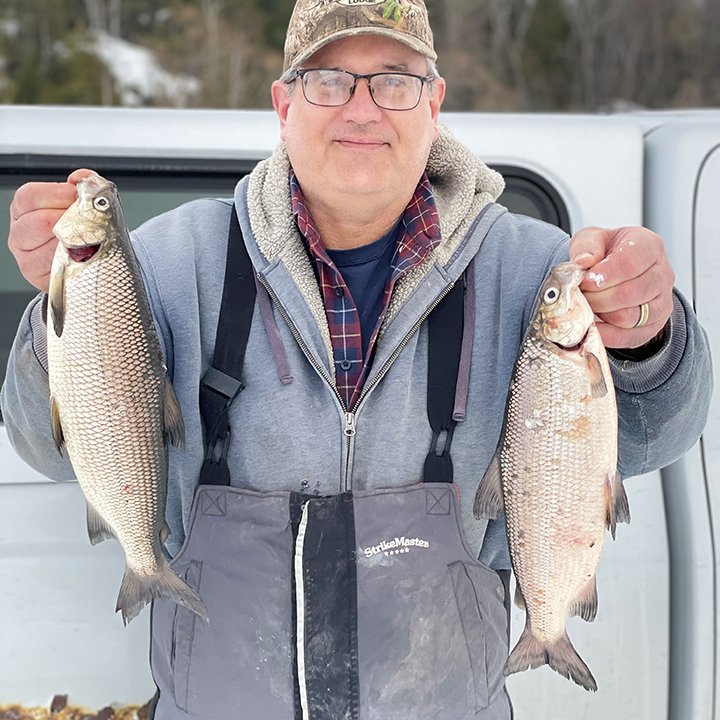
Whitefish/tullibee - Both whitefish and tullibee are really starting to get active for anglers targeting them. Anglers have been finding them over deep mudflats ranging from 25 to 35 feet of water. Small spoons or jigging raps in white and silver, loaded up with wax worms or minnow heads, fished about 15 to 20 feet down and aggressively, has been the ticket." — Arrowhead Outdoors, 218-365-5358
 News Release February 24, 2026 "Minnesota DNR Adds New Catch-and-Release Bass Season"
 "Anglers can now fish for bass before the traditional May fishing opener
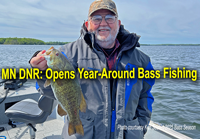
The Minnesota Department of Natural Resources’ fishing regulations for 2026 include a new catch-and-release season that makes fishing for largemouth and smallmouth bass open all year on inland waters. These changes for bass fishing and a variety of other new regulations are listed on pages 13-14 of the regulations book.
“We’re improving bass fishing opportunities after hearing strong support from anglers for earlier bass fishing,” said Eric Altena, Little Falls area fisheries supervisor. “Bass populations are thriving and have increased abundance and sizes, and compared with past decades, have broader geographic distribution in our state.”
Since bass spawning peaks in late May, which is later in the year than ..." Read Full Story >> Minnesota DNR Adds New Catch-and-Release Bass Season
Ely Area, Arrowhead Outdoors Fishing Report February 18, 2026
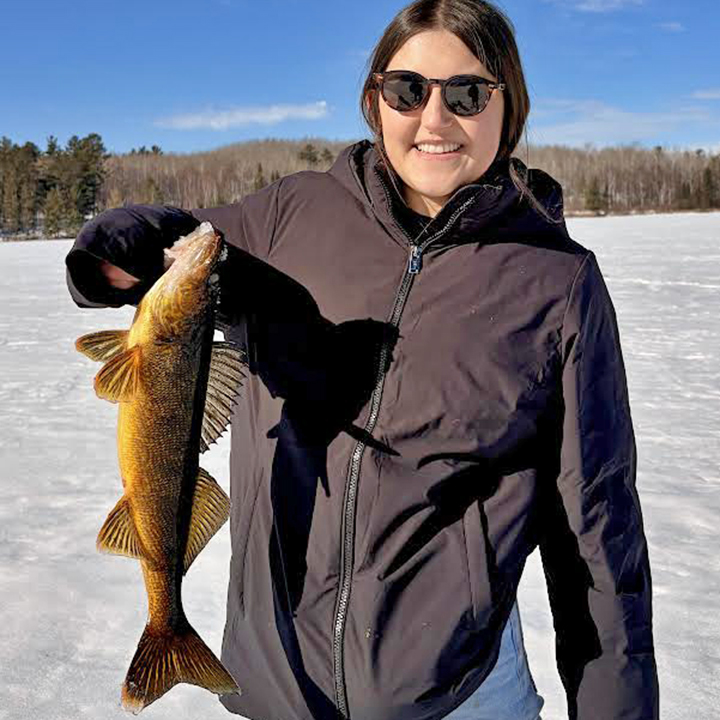 "Lake Trout - Lake trout continue to cooperate with the majority anglers this last week. Red/white, chartreuse and white bucktails, tipped with a gulp minnow, continue to out produce all other baits for anglers. Reports of lake trout being caught during the overnight hours continue to come in, but the key for success at catching lakers during the overnight hours has been to be on or very close to areas where eelpout are actively spawning. Minnows near the bottom have been key here. Key depths remain 30 to 50 feet of water.
Stream Trout - Rainbows and Splake continue to be a popular choice for anglers as reports of some great fishing continue to keep coming in. Both rainbows and splake are being found out in water ranging from 35 to 70 feet of water. Both are being caught anywhere from 5 to 30 feet under the ice by anglers. Small pink, white or chartreuse jig or spoon, tipped with a wax worm or dead minnow remains very effective.
Walleye - Walleye anglers reported that they are having success this last weekend. Small suckers continue to be the bait or choice for the anglers reporting the best success. Mud flats in 18 to 25 feet of water continue to be the best areas to find active walleyes. White and perch colored jigs, used in a deadstick or tip up has been the way to go. Remember that walleye season closes this Sunday February 22, 2026.
Pike - With another warm weekend anglers were out in force trying their luck for trophy pike. Some real giants were caught too! Medium to large size bait like frozen herring and smelt, fished under a tip up, were extremely popular choices. Large pike were found in classic pike locations like shallow weedbeds and river mouths. Remember that the inland waters Pike season closes this Sunday February 22, 2026.
Panfish - Crappies were a popular choice this last weekend as the area enjoyed spring like temperatures. Overall crappies cooperated with anglers. Crappies were being found in 25 to 35 feet of water. Crappie minnows, tipped on a small jig or a white soft plastic were very effective for anglers. Some large sunfish were mixed in with the suspended crappies, but more often than not, the big sunfish were glued to the bottom and wanted a wax worm tipped on a small jig.
Eelpout - As we near the peak spawning time for Eelpout (next full moon) anglers have been out in force scouting out their favorite eelpout locations. Anglers new to eelpout fishing should be looking to river mouths, sunken islands or large flats, in 10 to 35 feet of water, near deep water to find eelpout. Bright glowing jigs, loaded up with chunks of fresh dead minnows, herring or smelt is really key to getting bites. Best bite remains during the overnight hours, but as we get closer to peak spawning the bite will continue throughout the day.
Whitefish - Walleye anglers have been reporting that whitefish are showing up on their graphs during the day now. Small, panfish sized jigs tipped with small crappie minnows, wax worms or soft plastic bait have been getting bites. White continues to be a popular choice, but red has also accounted for a handful of whitefish. Large mudflats in 20 to 30 feet of water have been the best areas to look for the roaming whitefish. Whitefish are coming in about 5 to 15 feet off the bottom." — Arrowhead Outdoors, 218-365-5358
Lake of the Woods Ice Fishing Report February 17, 2026
 "Lake of the Woods ice fishing continues to fire on all cylinders. Anglers are reporting outstanding conditions across the South Shore, Rainy River, and Northwest Angle. Ice conditions this winter have been exceptional and we're now seeing more than 30 inches of ice in most areas of the lake. Recent cold weather continues building that solid platform beneath us.
Resort ice roads are not just maintained, they're impressive. Many of these roads now extend more than 20 miles out onto the lake, providing safe, reliable access to prime fishing grounds. As always, work through a reputable resort or outfitter who understands current ice conditions, weight limits, and where the fish are holding. They'll keep you safe and put you on fish.
An extended ice fishing season is the beauty of Lake of the Woods. Here, we enjoy extra fishing time that allows anglers more time on the ice than most Minnesota lakes. Fish houses can remain out overnight through March 31, 2026. The walleye and sauger fishing season runs through April 14, 2026 and the northern pike season never closes, it is open year-round.
There's still plenty of season ahead, and plenty of opportunity to get out here. Contact a Lake of the Woods resort and set up your trip in one of their many heated fish houses positioned on schools of walleyes and saugers. You'll be fishing in comfort while the resorts do the heavy lifting.
South Shore Ice Fishing Report: Consistent action in 28 to 32 feet of water. The South Shore continues to deliver consistent fishing. Resort ice roads adapt and extend as needed, keeping anglers positioned on active fish throughout the season. Most fishing activity remains concentrated in 28 to 32 feet of water, where we're picking away at quality catches day after day.
The bite has been consistent, that's the word that keeps coming up. Anglers are steadily picking away at walleyes, saugers, jumbo perch, pike, tullibees, and eelpout. This is Lake of the Woods doing what it does best: providing variety and opportunity. You'll sort through some smaller fish, that's part of the game on a lake. Loaded with multiple year classes, you'll connect with nice keeper walleyes and saugers, some protected slot fish and maybe even a trophy or two. The walleye and sauger posession limit on Lake of the Woods is a combined total of 6 fish, with up to 4 being walleyes. All walleyes measuring 19.5 inches to 28.0 inches must be released immediately. Anglers may posess one walleye over 28.0 inches.
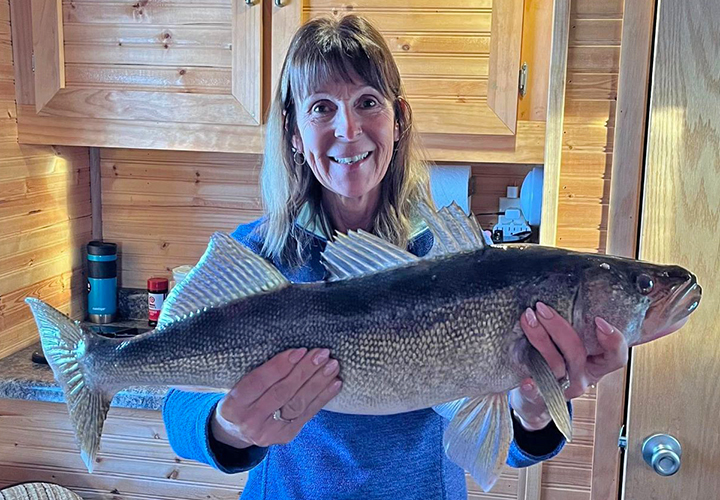 The mixed bag is as strong as ever. Along with walleyes and saugers, we're seeing plenty of big jumbo perch, eelpout, tullibees, pike, and even the occasional sturgeon. It's Lake of the Woods—you never know what's coming up the hole next, and that's part of the magic.
What's Working? The classic one-two punch continues to be the go-to approach: run an active jigging rod to draw fish in and trigger strikes, paired with a deadstick with a live minnow set 6 inches to a foot off bottom for fish in a more neutral mood. Jigging with a small to medium spoon tipped with a minnow head is the most popular presentation. Gold, glow red, orange and pink are hot colors.
For the deadstick, a gold blinking light lure with a red light combined with a dropper and live minnow has been consistent. Small jigs or a plain hook and live minnow a foot off of the bottom is tough to beat.
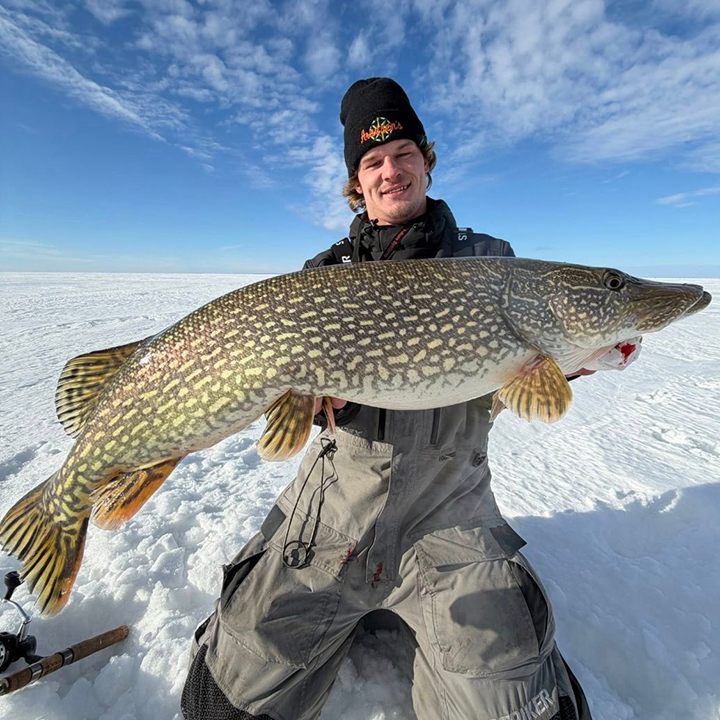
Big Pike Active: Anglers who enjoy targeting world class pike are already reporting good action on tip ups and quick strike rigs. Traditionally, live suckers or a good dead bait will get the flags flying. March is a key month to target big pike as they put the feedbag on and begin staging for the upcoming spawn. Sounds like some pike are already starting! Contact a Lake of the Woods resort for fish houses set up in areas specifically where there are pike.
Rainy River Ice Fishing Report – Focus on the Golden Hours: While most ice fishing activity is on the main lake, the Rainy River continues to reward anglers who target it strategically. The best walleye action happens during the "golden hours"—the first couple hours of daylight and the last couple hours before dark.
Sturgeon are being caught for those pursuing catch-and-release opportunities. The sturgeon catch-and-release season runs through April 23, 2026 when the harvest season reopens.
River ice requires extra caution due to current. Always fish through a resort or outfitter who knows the river and can provide safe access.
Northwest Angle Ice Fishing Report – Quality Action in 24 to 32 feet of water. The Northwest Angle is producing excellent fishing right now. The ice road from Young's Bay to the island resorts is in great condition, and fish cleaning houses are staying busy with quality catches. Most productive fishing is happening in 24 to 32 feet of water. The one-two punch of an active jigging line and a deadstick continues to work well. Anglers are consistently picking away at walleyes, saugers, jumbo perch, pike, eelpout, and tullibees—a true Lake of the Woods mixed bag." — Lake of the Woods Tourism, (800) 382-FISH
Wired2Fish 2026 "World Record Sturgeon: The Biggest Sturgeon Ever Caught"
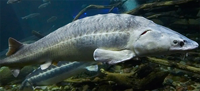 "Sturgeon somehow look ancient, and well they should: Often deemed “living fossils,” theirs is an evolutionary lineage more than 200 million years old. The ancient family Acipenseridae has changed little since the Jurassic period per fossil records, with a mostly cartilaginous skeleton similar to sharks and rays, with a covering of bony armor.
Their unique appearance as well as valued flesh and roe (for caviar) has made them of interest to sport fishermen as long as people have been fishing. Some species seldom grow to more than a few pounds, while others such as the mighty beluga, grow to nearly 3,500 pounds or more. Of 27 species of sturgeon found worldwide, the five species listed here have been submitted to the IGFA for world-record status. Of these five, all but one are found in ..." Read Full Story and Learn More >> Sturgeon
Ely Area, Arrowhead Outdoors Fishing Report February 11, 2026
 "Lake Trout - Lake trout fishing continues to be consistent fishing for anglers targeting them. Anglers continue to find them out in a little deeper water, 50 to 70 feet deep, but some of the bigger trout caught this last week were caught in 25 to 40 feet of water near eelpout spawning grounds. Regardless of where they find them, anglers are reporting tube bucktails and squid tails have been catching the trout. Chartreuse, red/white and pink have been effective colors.
Stream Trout - Anglers continue to report some great rainbow fishing on many of the local stream trout lakes. Many of the anglers report the best fishing is before 8am, so be sure to get out early if you want rainbows. Small spoons, tungsten jigs, tipped with wax worms, dead minnows or even soft plastics. Fish these 5 to 15 feet under the ice. Brook trout anglers continue to find brookies up in shallow water in 5 feet of water or less, with the same lures and baits as they are using for rainbow trout. Look to downed trees, beaver houses or weeds for the best Brook trout fishing.
Walleye - Walleye fishing continues to be more frustrating than fun for walleye anglers. Finding walleyes hasn't been the issue. Getting them to bite has been the issue. Deadsticking, tip ups or rattle reels has been getting the majority of bites. Small suckers or rainbows have been the best minnows to have down.
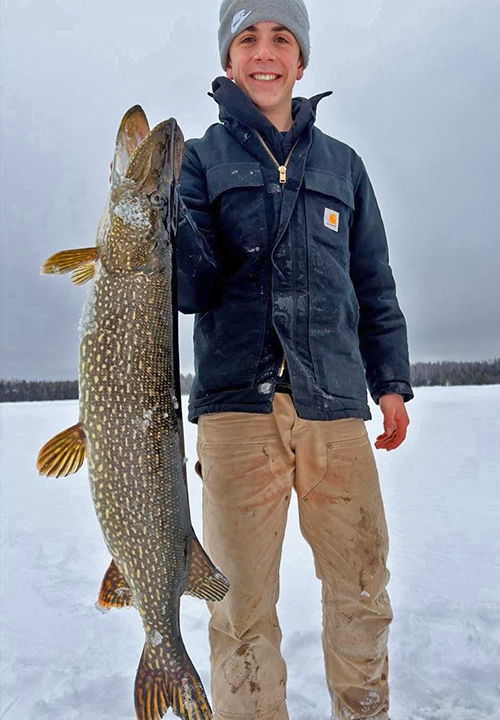
Northern Pike - Pike anglers set out tip ups this last week and many of them reported great fishing. Classic pike spots like shallow bays, near river mouths and structures near deep water all produced quality pike on medium sized suckers or frozen baits. Best depths were 8 to 15 feet of water, but panfish anglers who took the time to set out a tip up often caught some really nice pike.
Panfish - Panfish anglers started checking popular panfish lakes this last weekend as warm temperatures came to the Ely area. Success for panfish was mixed as February still isn't the best time to target panfish. Anglers found panfish on deep mudflats in 25 to 35 feet of water. Red soft plastics, wax worms and crappie minnows, fished on a small white, pink or chartreuse tungsten jig was effective for any active panfish anglers could find.
Eelpout - Eelpout continue to show up in anglers catches this last week. Evenings and overnight continue to be the best time to target eelpout, but anglers are starting to see them more and more during the day on their electronics. Humps that top out in about 15 feet of water, near deep water, seem to be the best one to fish right now. Heavy, bright glowing spoons or jigs, loaded up with either chunks of minnows or smelt.
Whitefish - Now this is a new one for us and somewhat of a mystery fish for many anglers who regularly fish the Ely area, despite being excellent table fare, strong fighters and eager biters when found. Whitefish fishing through the ice generally peaks in March, so the best is yet to come.
If you are interested in targeting them look for them in 25 to 35 feet of water, over deep, large mudflats. Whitefish behave a lot like lake trout so fish them 5 to 10 feet off the bottom with small to medium size jigging spoons, tipped with minnow chunks, wax worms or small soft plastics. Once whitefish come into your bait, keep the bait moving until they hit it. You stop jigging, they lose interest very quickly and are gone." — Arrowhead Outdoors, 218-365-5358
More Recent Fishing Reports
Follow on X • Follow on Facebook • Ely MN Area 2-11 • Lake of the Woods 2-10 • Mille Lacs Perch 2-9 • Schara Walleye Limits • Walleye Limit 2-1 • Walleye Limit 1-27 • IOWA Limits 1-23 • 1-22 Walleye Limits • Gary Barnard 11-11 • Technology 10-25 • Charts 1-23-25 • MAPS 1-22-23 • Barotrauma Study 1-25-24 • Fish Consumption • Forward Sonar • Panfish Workgroup
Lake of the Woods Ice Fishing Report February 10, 2026
 "Lake of the Woods ice fishing continues to deliver with excellent conditions across the South Shore, Rainy River, and Northwest Angle.
Ice conditions this winter have been very good, and recent cold weather keeps building quality ice across the lake. Resort ice roads are well-maintained and provide safe access to productive fishing areas. As always, it's important to work through a reputable resort or outfitter who understands current ice conditions and weight limits. They'll ensure you have safe access and put you in the right spots to catch fish.
Lake of the Woods enjoys an extended ice fishing season, giving anglers more time on the ice than most Minnesota lakes. Fish houses can remain out overnight through March 31, 2026 and the walleye-sauger fishing season runs through April 14, 2026. The northern pike season is open year-round. There's still plenty of season ahead!
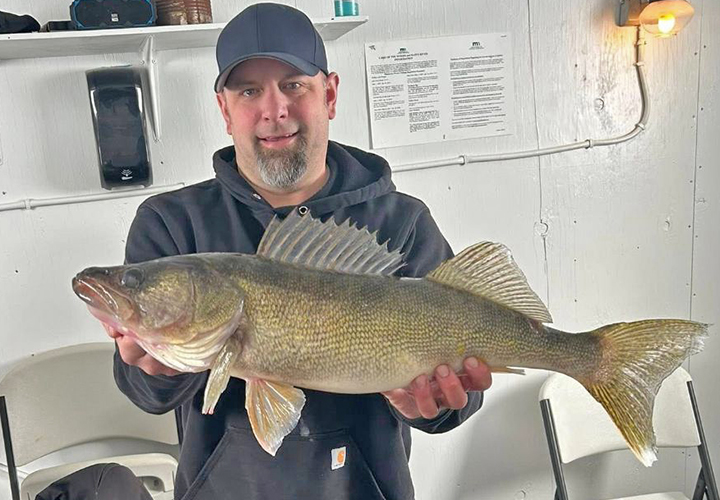
Resorts continue to extend and adapt, keeping anglers positioned on active fish throughout the season. South shore ice fishing reports indicate that key depths range from 28 to 32 feet of water where the bite has been consistent. Most groups are finishing the day with a mix of nice keeper walleyes and saugers.
Lake of the Woods is full of multiple year classes of fish. You'll sort through some smaller fish, but you'll also connect with quality keepers, slot fish between 19.5 to 28.0 inches that must be released and maybe even a trophy or two.
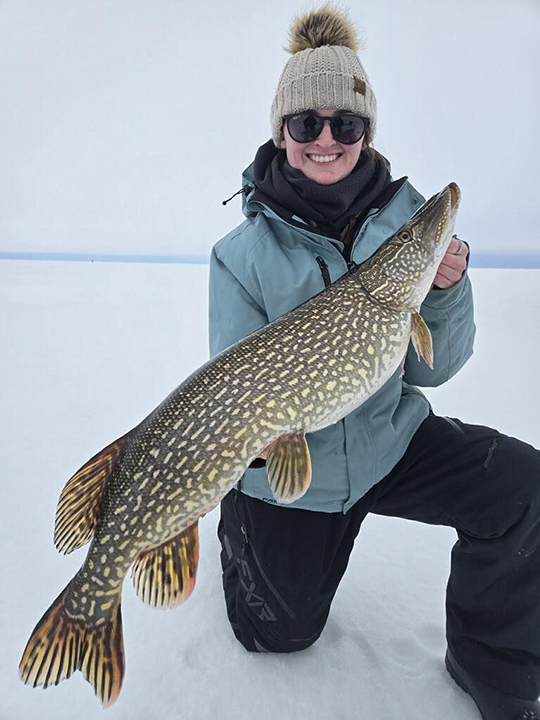 The mixed bag is alive and well. Along with walleyes and saugers, anglers are bringing in plenty of big jumbo perch, some eelpout, tullibees, a few pike, and even the occasional sturgeon. It's Lake of the Woods—you never know what's coming up the hole next.
The walleye and sauger possession limit on Lake of the Woods is a combined total of 6 fish. Of the 6 fish total, no more than 4 of them may be walleyes. All walleyes must measure less than 19.5 inches, except that one walleye over 28 inches may be possessed. All walleyes measuring 19.5 inches to 28.0 inches must be released immediately.
The classic one-two punch continues to produce: run an active jigging rod to draw fish in and trigger strikes, paired with a deadstick and live minnow set 6 inches to a foot off bottom for fish in a more neutral mood.
Rainy River Ice Fishing Report. River ice requires extra caution due to current. Always fish through a resort or outfitter who knows the river and can provide safe access.
Focus on the Golden Hours. While most ice fishing activity is on the main lake, the Rainy River continues to reward anglers who target it strategically. The best walleye action happens during the "golden hours", the first couple hours of daylight and the last couple hours before dark. Sturgeon are being caught for those pursuing catch-and-release opportunities. The sturgeon catch-and-release season runs through April 23, 2026 when the harvest season reopens.
The Northwest Angle is producing some excellent fishing right now. Outfitters report good action occurring in 24 to 32 feet of water.
The ice road from Young's Bay to the island resorts is in great condition, and fish cleaning houses are busy with quality catches.
Most productive fishing is happening in 24 to 32 feet of water. The one-two punch of an active jigging line and a deadstick continues to work well. Anglers are consistently catching walleyes, saugers, jumbo perch, pike, eelpout, and tullibees—a true Lake of the Woods mixed bag.
Ice conditions remain very good across the lake, ice road systems are well-maintained, and fishing overall has been good. Whether you're planning your first ice fishing trip or your tenth trip of the season, Lake of the Woods has the resorts, fish houses, guides, and fishery to deliver a memorable experience." — Lake of the Woods Tourism, (800) 382-FISH
 News Release "Mille Lacs Lake Yellow Perch Limit Drops To Five on February 9, 2026"
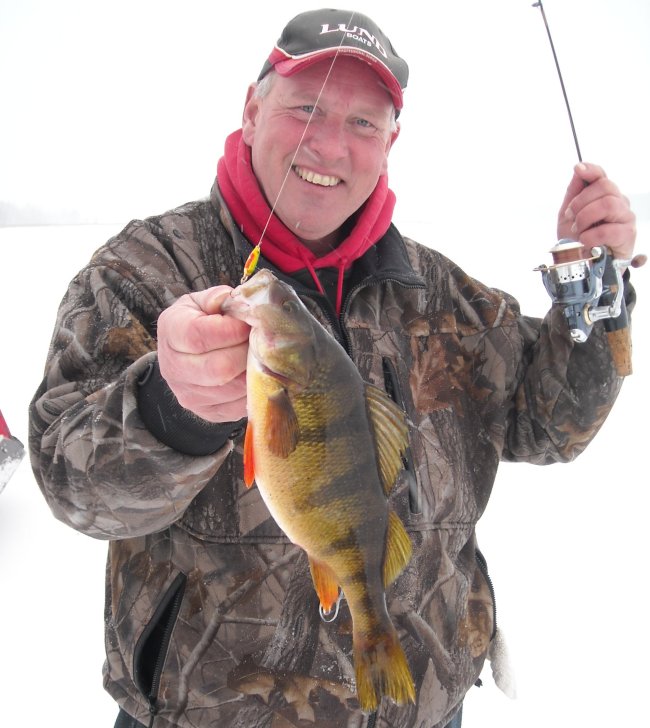 "Starting Monday, Feb. 9, the daily and possession limit for yellow perch on Mille Lacs Lake will be reduced from 10 to five. This regulation will be in place through Nov. 30, 2026.
The Minnesota Department of Natural Resources is adjusting the limit to help maintain a healthy perch population for the future and to stay within the state’s share of the harvestable surplus. In addition to being prized by anglers for the dinner table, the fish are a key species in the Mille Lacs Lake ecosystem and are a primary food source for predators, especially walleye.
“Many anglers have enjoyed good perch fishing this winter on Mille Lacs Lake, even better than last winter,” said Brad Parsons, Minnesota DNR fisheries section manager. “Our perch harvest each of the last two years has been more than double what it was in earlier years going back to 2012. The perch population being high enough to draw significant angler interest is a positive sign for the health of the lake.”
State-licensed anglers share the perch harvest on Mille Lacs Lake with Ojibwe Tribes that retain fishing rights by treaty. To conserve the fishery, the state and the Tribes cooperatively establish an annual safe harvest level through a government-to-government, co-management process. Each party then sets fishing regulations to stay within their share of the harvest. This year, the state’s share of the perch harvest is 36,500 pounds. As of Jan. 18, the state had harvested more than 17,000 pounds of perch.
Anglers can find Mille Lacs Lake fishing regulations and regularly updated data on state-licensed angler catches of walleye, northern pike and yellow perch on the >> Lake Mille Lacs Page Minnesota DNR website."
Lake of the Woods Ice Fishing Report February 5, 2026
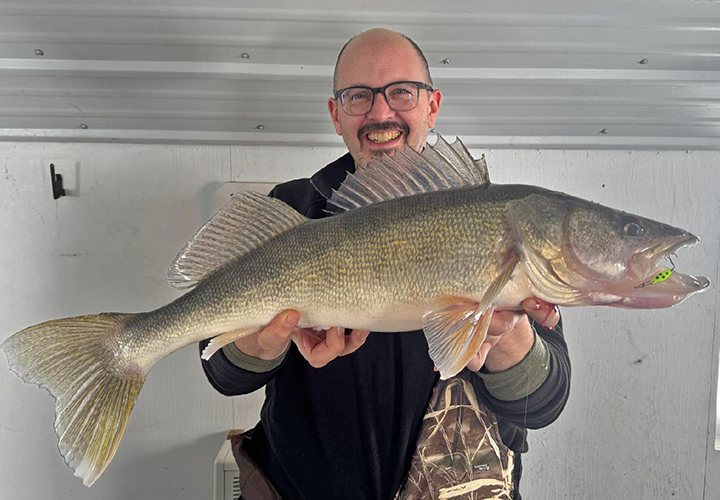 "Ice fishing is going strong across the South Shore, Rainy River, and Northwest Angle of Lake of the Woods. Recent cold weather continues building quality ice and anglers lakewide report excellent ice conditions. A big shout-out to all the ice guides and behind-the-scenes folks who work through subzero temps to make ice fishing on this incredible lake safe and enjoyable for everyone. Resort ice roads are in great shape, fish houses are seeing good action. Always confirm current ice road conditions and weight restrictions with your resort before heading out.
There's still plenty of ice fishing season ahead. Permanent fishing shelters are allowed to remain on the ice through March 31, 2026. The walleye-sauger fishing season runs through April 14, 2026. Northern pike fishing season is open year-round.
South Shore Ice Fishing Report: Resort ice roads are extending and adapting as fish move, keeping anglers positioned on active walleyes and saugers throughout the season.
Anglers report good action in 28 to 32 Feet of water, and the bite remains consistent. Most groups are coming off the ice with nice keeper walleyes and saugers by day's end. This is Lake of the Woods, and the lake is full of a variety of year classes. That means you'll catch some small fish, but along the way you'll run into nice keepers and maybe a few slot fish or even a trophy as well.
In addition to walleyes and saugers, anglers are catching plenty of big jumbo perch, some eelpout, tullibees, a few pike, and even a sturgeon here and there. It's Lake of the Woods—you never know what you'll catch.
Regulations Reminder: The limit for walleyes and saugers on Lake of the Woods is a combined limit of 6 fish, with up to 4 being able to be walleyes. All walleyes between 19.5 inches and 28.0 inches must be released immediately. Anglers are allowed one walleye over 28.0 inches in possession.
Proven Tactics: The one-two punch keeps delivering results: use an active jigging rod to attract fish and trigger aggressive strikes, then rely on a deadstick with a live minnow positioned 6 inches to a foot off bottom to catch fish in more of a neutral mood. On the jigging Rod, spoons such as Stop Signs, Buckshot Rattle, and Lindy Rattl'n Flyer spoons. Rippin' Raps, and swimming minnow baits continue to catch fish as well
On the deadstick setup, plain hooks, small ice jigs, or blinking light lures with a dropper and live minnow are all effective. Top Colors: Gold, gold/pink, glow/pink, glow red, glow white, and combinations of these colors. If fish aren't reacting well to your presentation, downsize. Electronics are very helpful in working fish. In addition, many of the nicer walleyes are coming through suspended.
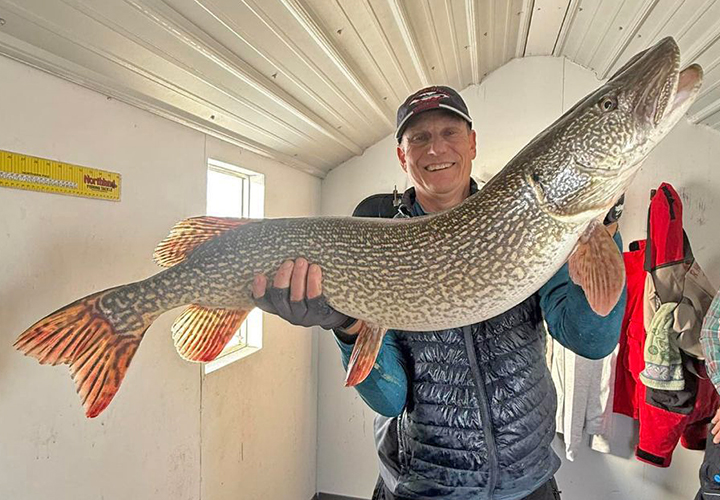 Rainy River Ice Fishing Report: Target the Golden Hours. The majority of ice fishing is happening on the main lake, but the Rainy River continues to produce for those who target it. The best walleye bite is during the first couple hours of the day and the last couple hours of the day. Time your fishing around these windows for the best action.
A jig and minnow or jigging spoon with a minnow head on your active line paired with a deadstick and live minnow in your second hole is a reliable combination.
Sturgeon are also in the mix for those interested in catch-and-release fishing. The sturgeon catch-and-release season runs through April 23, 2026 before the harvest season reopens.
Northwest Angle Ice Fishing Report: Solid Mixed Bags in 24 to 32 Feet of water. Ice fishing at the Northwest Angle is firing on all cylinders. The fish cleaning houses tell the story—quality catches are coming in regularly. The ice road from Young's Bay to the island resorts is in excellent condition, and fish houses are seeing steady action. Snowmobile trails to and from the Angle are well marked and in good shape for those with sleds.
Most fishing is taking place in 24 to 32 feet of water. Working the one-two punch of jigging one line and deadsticking the second is producing well. Anglers are coming off the ice with impressive mixed bags including walleyes, saugers, jumbo perch, pike, eelpout, and tullibees.
With ice conditions improving, well-maintained road systems, and consistent fishing across all areas, now is a great time to plan your Lake of the Woods ice fishing trip. The infrastructure is in place, the fish are cooperating, and there's still plenty of season left to enjoy. Whether you're a first-timer or a seasoned veteran, Lake of the Woods has the accommodations, expertise, and fishery to make your trip memorable. Always follow resort-maintained roads and posted weight limits for a safe experience." — Lake of the Woods Tourism, (800) 382-FISH
Wired2Fish 2026 "From Duck Calls to Jigging Raps: Angler Lures 12 Pound Walleye Through The Ice"
 "If you know Arliss Reed at all, you probably know him for luring ducks into range, not walleyes onto the ice. As the head guide at Habitat Flats, The Grand, Reed is far more recognizable with a duck call around his neck than a rod in his hand. But when Reed trades feathers for fins, he still knows how to put a serious bend in the rod.
Reed’s fishing roots run deep, well before his days of guiding waterfowl hunts in the Midwest. And like a lot of folks, he’s got a soft spot for walleyes.
“I grew up in northern New York,” Reed told Wired2fish. “It may not be northern Minnesota, Manitoba, or Ontario, but it’s walleye country.” His early days on the ice didn’t involve a whole lot of finesse, though he wouldn’t have traded the time on the ice with his dad for anything. “Unfortunately my dad’s idea of ice fishing was to ..." Read Full Story and Learn More >> From Duck Calls to Jigging Raps: Angler Lures 12 Pound Walleye Through The Ice
News Release February 5, 2026 "Minnesota DNR Proposes Harvest Limits for Native Rough Fish"
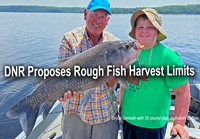 "The Minnesota Department of Natural Resources invites the public to comment on proposed rules related to daily and possession limits on native rough fish. Under the new proposed rules, these fishes – including bowfin, buffalo, carpsucker, freshwater drum, goldeye, mooneye, quillback, redhorses and suckers – would also get a variety of other protections.
Some examples of protections include noting that structural practices such as dams that hinder migration of these fish are no longer appropriate or desired, excluding bowfin from commercial harvest, and clarifying that native rough fish and also common carp taken by angling or dip netting can be returned to the water.
“We are continuing efforts to conserve these important species,” said Shannon Fisher, DNR fisheries populations monitoring and regulations manager. “Over the last handful of years, we’ve seen renewed appreciation for the role these fish play in ..." Read Full Report >> February 5, 2026 Minnesota DNR Proposes Harvest Limits for Native Rough Fish

Ely Area, Arrowhead Outdoors Fishing Report February 4, 2026
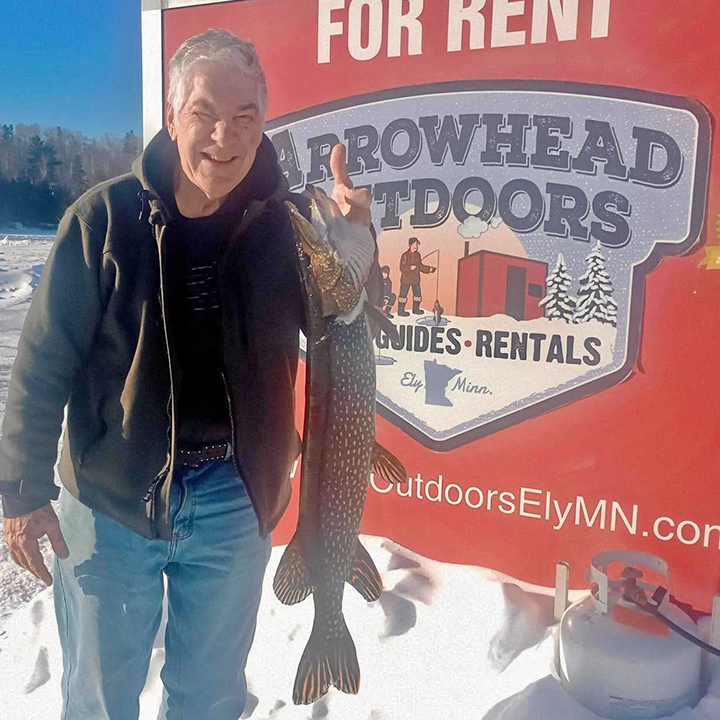 "Lake Trout fishing remains very consistent for many anglers this last week. Anglers continue to report that they are finding lakers in 30 to 60 feet of water along points and flats. Chartreuse bucktails, squid tails and tubes remain the most popular choice for successful anglers. Reports of a chunk of minnow suspended 1 to 3 feet off the bottom, fished under a tip up, continue to come in from anglers.
Stream Trout - Rainbows continue to be easy picking for many anglers this last weekend. Anglers have been fishing with small jigging spoons or small tungsten jigs, tipped with a small dead minnow or wax worm. Anglers have been fishing 5 to 15 feet under the ice, oftentimes over 50 to 80 feet of water.
There is a good splake bite being reported by anglers from a variety of Ely area lakes. Like the rainbows, splake also hit jigging spoons or jigs tipped with a minnow or wax worm were very effective on Splake. Many anglers found Splake near deep points or sharp drop offs in 30 to 70 feet of water.
Walleye - As we enter the slowest time of the year for walleyes, walleye reports reflect this. Many anglers reported walleyes to be very negative and when one was caught it often was too small to keep. Anglers had success with smaller minnows, dead stick or fished under a tip up. Best reports came from deeper water ranging from 25 to 30 feet, over mud flats.
Northern Pike anglers took advantage of the break in the cold and had decent luck fishing weedbeds and river mouths. However, the biggest pike reported this last week was reported being caught over deep water while lake trout fishing. Either way medium sided suckers fished under a tip up was the most effective to get bites. Frozen smelt or alewife's also produced good numbers of fish for anglers.
Eelpout reports are starting to come in from anglers that are starting to target them. Majority of reports continue to be from the overnight hours. Anglers have mainly been targeting them on sunken islands that range from 15 to 40 feet of water. Humps near deep water or river mouths have been the best ones to target. Heavy, bright glowing jigs, loaded up with the smallest minnows you can get has been the best way to go." — Arrowhead Outdoors, 218-365-5358
February 4, 2026 "MN-FISH Schara, Walleye Limit Discussion" Ask not what we will do for you, explain what you will do for us?
 I listened to an interesting program on the radio this weekend. The show, Gone Outdoors with Kyle Agre and Scott Brewer, included segments covering a variety of topics, but the segment that drew my attention was their interview with Ron Schara. Television host, outdoor writer, and multi-talented angler, Schara now serves as a founding member, and president of MN-FISH.
MN-FISH, a dual mission, fishing advocacy organization, offers anglers the opportunity to help shape the future of fishing in Minnesota.
Brewer and Agre covered several issues with Schara, including Minnesota’s planned move to lower walleye possession limits from 6 fish, down to 4. Schara’s take on the subject may surprise you, I know it did me.
Brewer-Agre, “MN-FISH has had a lot of discussion on this topic over the last year. Tell our listeners what the MN-FISH stance on this proposal is?”
Schara, “We’re working up an official proposal. We haven’t taken a position yet, but I can tell you that there is one question we want to ask, and we’re going to demand some answers to, and that is what is the DNR’s reason for doing this? There’s been some conjecture on our board that centers on what invasive species, and climate change and blah blah blah is doing to walleyes. But our question to the DNR is this, what else are you going to do?
Just lowering the limit doesn’t necessarily mean you’re going to improve walleye fishing in the state. A lot of the lakes, and some of the big lakes already have lower limits. I’ve got no problem with that, but they say we’re gonna lower limits to four because we’re concerned about Ice Fishing Minnesota. We ask this question, what else are you going to do? Are you going to review your stocking policies? Are you gonna work on walleye habitat projects? There’s a lot of other things besides just lowering the limit.
 Besides putting this on the anglers, telling anglers you guys need to try and maybe conserve a few of these walleyes, what can the DNR do to help grow more walleyes? Can we help save a few more walleyes from other predators or whatever the occasion may be? There’s a lot of support from anglers; most are very anxious and willing to reduce our impact if we think it’s going to make fishing better. But there’s no guarantee that lowering fish limits now is going to make fishing better if the DNR doesn’t do more than that.”
Continuing the interview, Agre, Brewer and Schara discuss DNR funding, field surveys, hatchery improvements and more. For the whole interview in full context, I highly recommend listening to the full show. For the full report, click the image or follow this link to >> Gone Outdoors Radio, January 31, 2026 Edition Featuring Ron Schara, Randin Olson and Andy Holt
Friendly Reminder: The new regulation, as presently planned, will become effective in March of 2027. The new statewide possession limit of 4 walleyes with one over 20 inches will become the permanent statewide regulation.
The public comment period remains in effect from now until March 4, 2026, and offers anglers one last chance to vote either yes, or no and that’s it, nothing in between. If DNR fisheries officials, after reviewing public comments, feel that there’s adequate public support, then the new rules, as they are written, will be implanted. If fisheries folks deem public support to be inadequate, then it is possible that they might decide not to move forward with the new plan.
You can voice your support, or your opposition to the new regulations in 1 of 3 ways.
- Email to fisheries.rulemaking.comments.dnr@state.mn.us. Please mention “walleye limit” in the subject line or body of the email.
- Phone the Minnesota DNR at 651-259-5235.
- US Mail delivered to Fisheries Rules and Regulations Coordinator, Minnesota Department of Natural Resources, 500 Lafayette Road, St. Paul, MN 55155.
— Jeff Sundin, The Early Bird Fishing Guide Call-Text 218-245-9858 • Email • Facebook • X
• Subscribe Insider Newsletter
 Reader Comments February 1, 2026 "Travis Krug For President?"
 Dave Allen wrote, “Good day Jeff, I just read your January 27, 2026, post that shared comments fro Travis Krug about the current Minnesota plan to cut walleye possession limits.
I don’t know anything about Mr. Krug other than what I learned from his commentary about his family’s Minnesota fishing experiences, and the proposed lowering of the state’s walleye possession limit. In his letter to the Minnesota DNR, Krug speaks with much more common sense than most politicians; I’d vote for him in a heartbeat. Travis Krug for President!”
Reader Comments February 1, 2026 "Minnesota Anglers Deserve Clear Explanation"
Gary Korsgaden wrote; "Minnesota anglers deserve clear, data driven explanations for any major regulation change, especially a statewide reduction to a 4 fish walleye limit. Right now, the evidence simply doesn’t support the need for such a rule. Statewide survey data do not show a consistent decline in walleye populations, and lake specific biological assessments the foundation of Minnesota’s fisheries management do not indicate widespread over harvest. If harvest were harming populations, it would appear in age structure, recruitment, and mortality trends, yet no such patterns have been presented.
There is also no population modeling demonstrating that a 4 fish limit would materially improve sustainability. This matters because roughly 95% of anglers already harvest four or fewer walleyes per day. A regulation that doesn’t meaningfully reduce harvest cannot meaningfully increase abundance.
Claims about climate change, invasive species, or improved angler technology may be valid concerns, but a blanket harvest reduction does nothing to address those factors. Current creel data, including studies on forward facing sonar, show no evidence that increased angling efficiency is driving population declines.
Minnesota has long relied on lake specific management because lakes differ dramatically in productivity, recruitment, and fishing pressure. If a lake needs a lower limit, the DNR already has the tools to implement one based on data. A statewide rule bypasses that proven approach without providing a biological justification.
Finally, if anglers are expected to understand and support regulation changes, the same transparency should apply to organizations influencing policy. Anglers deserve to see the actual data behind any claims of declining populations or increased harvest pressure." Gary Korsgaden
Wired2Fish January 28, 2026 "The Striper Fishing Capital of the World: Lake Texoma"
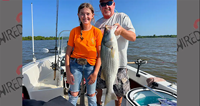 "You won’t see hatchery trucks roll up to Lake Texoma to stock striped bass. The fish are doing just fine on their own.
“At Texoma, the stripers are like the golden goose that keeps producing,” said Matt Mauck, a regional fisheries supervisor for the Oklahoma Department of Wildlife Conservation. “We have good year-classes of fish year after year.”
What started off as an experiment in the mid-1960s to stock stripers and see if they would take hold has become a giant success.
“By 1974, we saw signs of natural reproduction and we ceased stocking,” Mauck said. “The fish took it from there. Today, we have yearly natural recruitment that far exceeds what we could ..." Read Full Story and Learn More >> The Striper Fishing Capital of the World: Lake Texoma
You Are Invited To Become A Duly Deputized Fishrapper Cub Reporter Too!
 If you've been waiting for a gold engraved invitation to participate in the daily reports, then stop waiting and consider this your own personal invitation.
Helping your fellow fishermen and women stay abreast of fishing conditions in your area is good for everybody and it's easier than you think! You don't have to write a book, you don't have to share your secret fishing spots and you don't even have to mention your lake. You see, with just a few words about general trends, seasonal patterns or local weather conditions you can help steer your fellow anglers to more gratifying fishing experiences. So, be like Dan and Sean, and become a duly deputized "Cub Reporter", it's good for fishing and that's good for everybody!
Use the Contact Us page, or if you prefer to be "social", use our community page on facebook Fishing Reports Minnesota, that is the Facebook counterpart to this page and it is open to the public, so you can post your own fishing update or just share a photo of a nice catch.